The Ghana Anti-Corruption Coalition (GACC) has called on journalists to move beyond routine news reporting and embrace analytical, accountability-driven journalism as a key weapon in Ghana’s fight against corruption.
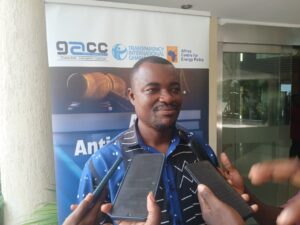
This call was made by Mr. Samuel Harrison Cudjoe, Programmes Officer at GACC, during a capacity development workshop for journalists held under the project, “An Anti-Corruption Initiative for Enhancing Governance and Accountability.” The workshop targets journalists who participated in the 2024 media capacity development training and seeks to deepen their understanding of governance and anti-corruption reforms while improving the quality of reporting on accountability issues.
According to Mr. Cudjoe, the follow-up training builds on lessons from the first workshop, where participants demonstrated that they had applied knowledge gained, but also highlighted persistent challenges and roadblocks.
“When we did the recap this morning, we realized that journalists actually used the lessons from the first training. That tells us that what we did went down well. This second workshop is meant to strengthen and build on that foundation,” he explained.
He said GACC wants journalists to fully understand the country’s anti-corruption agenda and ensure that this understanding is reflected in the kinds of stories they produce.
“We don’t want only straight news reporting. We want to see analysis, context, and depth stories that inform the Ghanaian public and hold public officers to account,” Mr. Cudjoe stressed.
Roadblocks to Accountability Journalism
The GACC officer acknowledged that journalists face significant obstacles in covering corruption, including editorial pressures, threats, and the clash between public interest and business considerations within media houses.
“These challenges tell us that we must move a step higher. We may need to engage editors directly and help them understand why anti-corruption reporting is essential and how they can support their journalists,” he noted.
He reiterated GACC’s belief that fighting corruption is a collective responsibility.
“At Ghana Anti-Corruption Coalition, we believe every sector of society has a role to play. Journalists are critical actors in this process.”
Mr. Cudjoe outlined key indicators GACC will use to assess the success of the training, including an increase in public accountability stories, more analytical and investigative pieces, and stronger collaboration between journalists and civil society organisations.
He also encouraged journalists to utilise existing support platforms such as the Advocacy and Legal Advice Centre hosted by Transparency International Ghana to seek assistance, especially when facing threats or legal challenges.
“We will deliberately follow up on the kinds of stories you write and how they advance the anti-corruption agenda in Ghana,” he added.
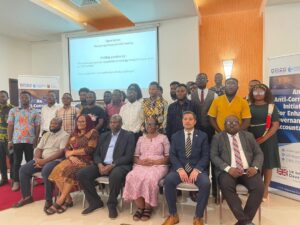
The workshop was well attended by leading personalities from civil society and development partners, including Mrs. Beauty Emefa Narteh, Executive Secretary of GACC; Mrs. Mary Awelana Addah, Executive Director of I-Ghana; Mr. Kodzo Yaotse, Policy Lead–Petroleum and Conventional Energy at Africa Centre for Energy Policy (ACEP); and Mr. Hooman Nouruzi, Head of Political and Governance at the Foreign, Commonwealth and Development Office (FCDO).
The session was facilitated by Dr. John Osae-Kwapong of Democracy Project, who guided discussions on strengthening the media’s role in promoting transparency and accountability.
Mr. Cudjoe expressed optimism about the future role of journalists in combating corruption, noting that some of Ghana’s most impactful anti-corruption actions have stemmed from media exposés.
“We want to see a future where journalists move from straight reporting to strong analytical pieces, where they feel safe doing their work, and where they can rely on existing platforms for protection when threats arise,” he said.
He emphasised that achieving this vision will require sustained effort, coalition-building, and partnerships among journalists, civil society, and state institutions.
“It will not come on a silver platter. But if we work together, we can achieve tangible results in the fight against corruption in Ghana.”
Organisers say the workshop marks another important step in strengthening the media’s capacity to serve as a powerful pillar of accountability and good governance.