The West Africa Peoples’ Organisation (WAPO) has called for stronger regional solidarity, political organisation and collective action to dismantle imperialist and neo-colonial domination, insisting that Africa’s liberation and development depend on the sovereignty and unity of its people.
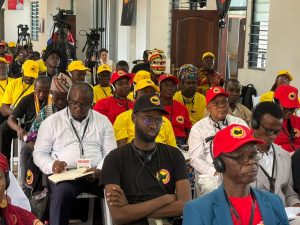
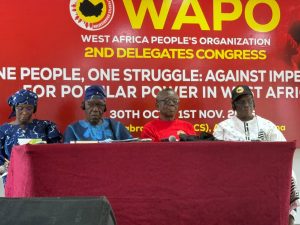
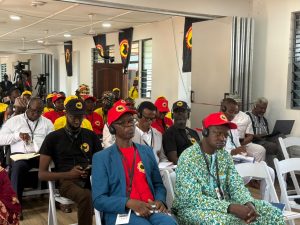
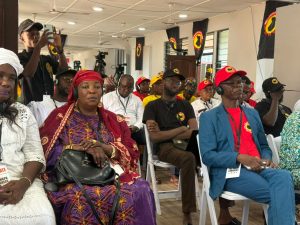
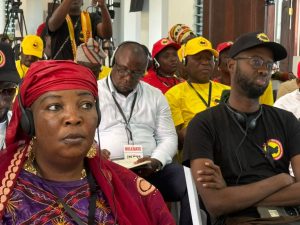
The organisation made the call at its Second Congress in Accra, where its leadership reviewed developments across West Africa, assessed its achievements over the past four years and outlined priorities for strengthening the Pan-Africanist movement between 2026 and 2030.
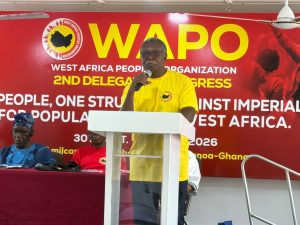
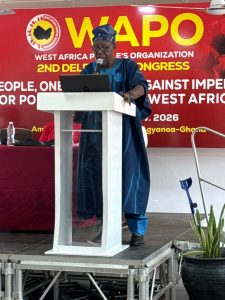
In his opening address, Chairman of WAPO’s Coordination Council, Professor Philippe Toyo Noudjenoume, described the political developments in Mali, Burkina Faso and Niger under the Alliance of Sahel States (AES) as a significant expression of Africa’s growing determination to reclaim control over its political, economic and natural resources.
He argued that the AES represents an ongoing patriotic and sovereignist revolution, pointing to its efforts to reduce foreign military influence, strengthen control over strategic natural resources, promote local industrialisation and deepen regional cooperation.
According to him, the formation of the Confederation of Sahel States is an important step towards the Pan-African unity envisioned by leaders such as Kwame Nkrumah, Sékou Touré, Patrice Lumumba, Modibo Keita and Amílcar Cabral.
Professor Noudjenoume maintained that African countries must move beyond political independence to achieve genuine economic, cultural and military sovereignty.
He identified slavery, colonialism and neo-colonialism as major historical forces responsible for Africa’s continued dependence and underdevelopment, arguing that the continent must reclaim control over its resources, institutions, cultural identity and development priorities.
He also criticised what he described as the continued influence of former colonial powers, particularly France, over some African countries through military, economic, monetary and cultural arrangements.
The WAPO chairman called on progressive political movements, workers, youth and women across West Africa to support efforts aimed at achieving genuine national liberation and resisting external domination.
He further urged revolutionary forces not to distance themselves from the developments in the Sahel but to engage constructively to ensure that the ongoing political transformation advances towards a broader national, democratic and anti-imperialist revolution.
WAPO reports 35% membership growth
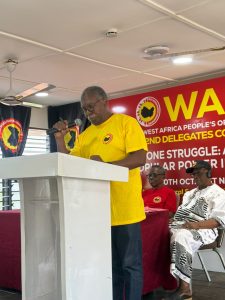
Presenting the Coordinating Council’s Quadrennial Report for 2022–2026, Secretary General Kafui Kan-Senaya said the organisation had expanded its membership from 23 organisations in 10 countries at its founding in December 2022 to 31 organisations across 11 West African countries.
This represents a 35 per cent increase in membership, with Burkina Faso becoming the latest country to join the organisation’s regional network.
Eight organisations were admitted in December 2025, six of them from AES member states, strengthening WAPO’s presence in the Sahel.
The report also disclosed that 356 cadres, comprising 201 men and 155 women, had undergone political education and residential training through the Amílcar Cabral School.
The school, according to the report, remains a major instrument for developing political consciousness, strengthening Pan-Africanist ideology and preparing a new generation of progressive leaders across the region.
On political engagement, WAPO highlighted its collaboration with the International Peoples’ Assembly (IPA) in organising an Anti-Imperialist Conference in Niamey, Niger, in November 2025.
The organisation also reported solidarity engagements with progressive movements and political organisations across Africa and beyond, including those in Palestine, Cuba, Venezuela and the Sahrawi Arab Democratic Republic.
Its relationship with major labour organisations, including the Nigeria Labour Congress, Trade Union Congress of Ghana and other regional trade union bodies, was also identified as an important foundation for expanding its engagement with organised labour.
Resources, repression identified as major challenges
Despite the progress recorded, the Coordinating Council acknowledged that inadequate financial resources had affected some of its programmes, particularly regional visits and the participation of delegates at the Second Congress.
The report also identified irregular publication of The Spark, WAPO’s official journal, difficulties in securing country correspondents and limited distribution networks as challenges confronting its media operations.
It further expressed concern about what it described as growing repression against progressive political movements in parts of West Africa.
For the 2026–2030 period, WAPO intends to strengthen its organisational structures by establishing dedicated wings for workers, peasants, women and youth.
The organisation also plans to expand political education programmes, improve its media presence, recruit correspondents across member countries and intensify regional solidarity campaigns.
Other priorities include completing regional visits to member organisations, strengthening cooperation with trade unions, opposing foreign military presence in West Africa and deepening solidarity with the AES and other progressive movements.
The organisation further intends to sustain its support for Palestine, Cuba, Venezuela and Western Sahara while building broader alliances among progressive forces across the sub-region.
Concluding the report, Mr Kan-Senaya said the past four years had witnessed significant political developments in West Africa, adding that WAPO must strengthen its organisational capacity to translate its vision into collective action.
He called on delegates to use the Second Congress to renew the organisation’s mandate and establish a stronger foundation for advancing its objectives.
WAPO was established in Winneba, Ghana, in December 2022, to unite political parties, movements, workers, youth and women’s organisations in advancing Pan-Africanism and confronting colonialism, neo-colonialism, racism, patriarchy and other forms of oppression.