By: Martin Osei Tutu
The Nyansa Institute for Strategic Dialogue has brought together Ghana’s thought-leaders to discuss and find solutions to emerging geopolitical threats facing Ghana, West Africa and the African continent.
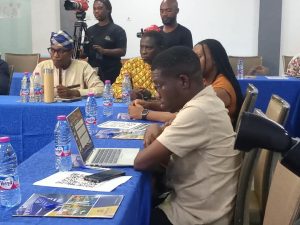
The dialogue, held under the theme, “Bringing Ghana’s Thought-Leaders Together To Address Emerging Geopolitical Threats,” created a platform for deep thinking, honest conversation and strategic action on issues that affect the peace, security and future development of the nation.
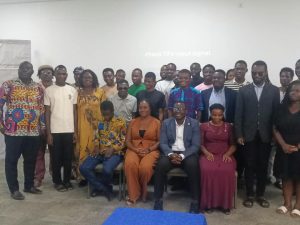
It brought together a rich mix of participants, including policymakers, security experts, academics, diplomats, business leaders, media practitioners, traditional leaders, civil society actors and young professionals, all united by a shared concern for Ghana’s future in a fast-changing world.
In a world where geopolitical tensions, security threats, economic pressures, misinformation, climate change, terrorism and regional instability continue to shape national decisions, participants agreed that the need for strategic dialogue has become more urgent than ever before.
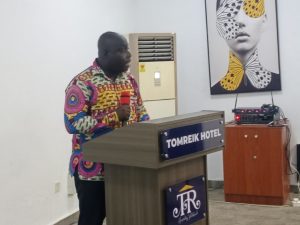
The dialogue opened with a Welcome Address by Mr. Okyere Baafi, who represented the Executive Director of the Nyansa Institute.
In his welcome address, Mr. Baafi warmly welcomed all participants, speakers, policymakers, security experts, academics, diplomats, business leaders and young professionals to the Institute’s strategic dialogue.
He said the Nyansa Institute was established to provide a non-partisan platform where Ghana’s best minds can think together, share ideas and develop practical solutions to the complex challenges facing the country and the continent.
According to him, Ghana can no longer afford to react to global events without understanding their implications. The country needs forward-looking dialogue, research and policy recommendations that protect its sovereignty, security and development.
He urged participants to look beyond politics, partisanship and personal interests, and to focus on Ghana’s national interest, Africa’s unity and the long-term security of future generations.
He added that strategic thinking must not remain in lecture halls and conference rooms. It must influence policy, strengthen institutions and prepare leaders to make wise decisions when the country faces pressure from within and outside.
One of the key speakers at the dialogue, Ms. Marie Noelle, a Policy Adviser, stressed that Ghana must move beyond ad-hoc responses and develop a clear national policy plan to guide the country in times of crisis and uncertainty.
Speaking on safety and security, Ms. Noelle said Ghana cannot afford to be reactive when threats emerge. She argued that a well-defined national policy plan would give institutions clear direction, ensure coordination among security agencies, and help the country to protect its citizens, borders and critical infrastructure.
She explained that without a national plan, agencies work in isolation, resources are wasted, and responses to threats become slow and confusing. A national policy plan, she said, would define roles, set priorities and ensure that every institution knows what to do before, during and after a crisis.
She was emphatic that leadership must come with accountability. According to her, those in authority who cannot do the job must be fired, because the safety and security of the nation cannot be sacrificed on the altar of incompetence, complacency or political convenience.
Ms. Noelle noted that Ghana needs leaders who are competent, decisive and committed to the national interest, and institutions that are strong enough to act swiftly when the country is under threat. She said the nation must reward performance and punish failure, especially in areas that concern the lives of citizens.
Her remarks sparked deep reflection among participants, who agreed that national security must be treated as a top priority, not as an afterthought.
Another speaker, Mr. Emmanuel Amoah Darkwah, turned attention to trade and the economy. He disclosed that foreign direct investment in trade was 2 billion dollars in a year, a clear indication that Ghana remains attractive to investors.
He said the figure shows that the world still has confidence in Ghana as a stable destination for business and investment, and that this confidence must be protected and built upon through sound policies and strong institutions.
He warned, however, that Ghana cannot be used as a dumping site for other countries. He said the country must protect its markets, its industries and its people from the influx of substandard and unwanted goods from abroad.
To achieve this, Mr. Darkwah said Ghana should fight against the importation of used goods. He argued that the continued importation of used goods undermines local manufacturing, kills jobs and weakens the economy.
He explained that when local factories cannot compete with cheap imported used goods, they close down, young people lose jobs, and the country becomes more dependent on others for its basic needs. Fighting against this trend, he said, is not about closing Ghana to the world, but about protecting Ghanaian businesses and creating space for them to grow.
He added that Ghana is blessed with gold, which can propel the country far if it is managed well. According to him, the country’s natural resources must be used strategically to build industries, create wealth and secure Ghana’s place in the global economy.
Mr. Darkwah said gold should not only be exported in its raw form, but should be used as a foundation for value addition, job creation and national development. If managed transparently and responsibly, he said, gold can transform Ghana’s economy and improve the lives of its people.
Through its forums, roundtable discussions, research and policy dialogues, the Nyansa Institute seeks to bridge the gap between knowledge and action, and to develop practical recommendations for decision-makers and institutions.
Participants at the dialogue agreed that Ghana’s security, economy and sovereignty are closely linked. A country that is weak economically, they noted, is also vulnerable to external pressure and manipulation.
As global power shifts and new threats emerge, the work of the Nyansa Institute for Strategic Dialogue is expected to contribute significantly to national security awareness, informed policymaking, and the promotion of peace, stability and development.
The Institute also aims to mentor a new generation of strategic thinkers who understand diplomacy, security, economics and governance, and who can contribute meaningfully to national and continental conversations.