HomeBusinessKGL SHOWS THE WAY AS A RESPONSIBLE INDIGENOUS TAXPAYING GIANT IN GHANA

KGL SHOWS THE WAY AS A RESPONSIBLE INDIGENOUS TAXPAYING GIANT IN GHANA

Date:

Related stories

GPHA Fire and Safety, LCB Worldwide Ghana Crowned Champions, 2026, LCB, Corporate, Games 

  The Ghana Ports and Harbours Authority (GPHA) Fire and Safety Team and LCB Worldwide Ghana Football Team have emerged champions of the 2026 LCB Corporate Games in the Tema and Accra Zones respectively, following weeks of competitive football action. The grand finale of the fifth edition of the competition was held on Saturday, October 31, 2026, at Mexico Park, Community 2, Tema, bringing together participating companies from the ports and shipping industry and other sectors. In the Tema Zone final, GPHA Fire and Safety secured a narrow 1-0 victory over the Ghana National Fire Service (GNFS) Team to clinch the ultimate title. In another decisive encounter, LCB Worldwide Ghana delivered an impressive performance in the Accra Zone, thrashing the Ghana Immigration Service Team 5-0 to emerge champions. The final standings saw LCB Worldwide Ghana finish first in the Accra Zone, followed by the Ghana Immigration Service in second place, while Manna Team settled for third. In the Tema Zone, GPHA Fire and Safety claimed the top spot, with the Ghana National Fire Service finishing as runners-up and Wilmar Africa taking third place. Winners Take Home Cash Prizes  The victorious teams were rewarded with cash prizes in recognition of their performances. The champions in both zones received GH¢20,000 each, while the first runners-up took home GH¢10,000 each. The second runners-up were also rewarded with GH¢5,000 each. Individual awards were presented to outstanding performers, with the tournament's top scorer receiving GH¢2,000 and the Best Goalkeeper taking home GH¢1,000. 16 Teams Compete in Fifth Edition  A total of 16 teams, comprising eight teams from each zone, participated in this year's competition, which featured several weeks of exciting football action. The Accra Zone participants included the Ghana Union of Traders (GUTA), Ghana Institute of Freight Forwarders (GIFF), LCB Worldwide Ghana, Ghana Immigration Service, Aviance, Mariners, Manna and Conquerors. The Tema Zone was represented by Port Hub, GPHA Fire and Safety, Ghana National Fire Service, GPHA Mechanical, Ezeylinks, Wilmar Africa, Tema Metropolitan Assembly (TMA) and Ghana Dock Labour Company Limited (GDLC). LCB Eyes Expansion of Corporate Games  Speaking to the media on the sidelines of the grand finale, a representative of the Human Resource Department at LCB Worldwide, Solomon Dwamena Aboagye expressed satisfaction with the performance of the participating teams and the overall impact of the competition. He noted that the objectives behind organising the games had consistently been achieved over the years, adding that LCB Worldwide Ghana remained committed to expanding the initiative to attract more corporate organisations. “We are hoping that in the next few years, the participating companies will be more. We are hoping to bring companies from other industries. We are expecting the financial institutions, oil and gas companies and even the educational sector as well,” he said. Mr. Aboagye further disclosed that the competition was fully sponsored by LCB Worldwide Ghana, expressing optimism that the company would continue to mobilise resources to sustain and increase the prize money in subsequent editions. Promoting Corporate Unity Through Sports  The LCB Worldwide Corporate Games was initiated to foster camaraderie, strengthen professional relationships and promote bonds of friendship among companies, particularly those operating within the ports and shipping industry. Beyond sports, LCB Worldwide Ghana has also established a strong presence through its corporate social responsibility initiatives. The crisis management company has been operating in Ghana since 2017 and has been contracted by the Government of Ghana, through the Ministry of Health, to undertake fumigation and disinfection of cargo at the country's ports and designated points of entry and exit. As part of its commitment to public health and community development, the company has undertaken fumigation exercises at markets, hospitals, senior high schools and tertiary educational institutions across the country. The successful organisation of the fifth edition of the LCB Corporate Games further underscores the company's commitment to using sports as a platform to promote teamwork, corporate engagement and stronger relationships among businesses in Ghana.  

WAPO Calls for United Pan-Africanist Struggle

  The West Africa Peoples’ Organisation (WAPO) has called for...

Thought-Leaders Call For Accountability, National Plan And Protection Of Local Industry

  By: Martin Osei Tutu The Nyansa Institute for Strategic Dialogue...

At a time when questions about corporate responsibility and tax compliance continue to dominate Ghana’s economic discourse, one indigenous company has stepped forward not with words, but with action.

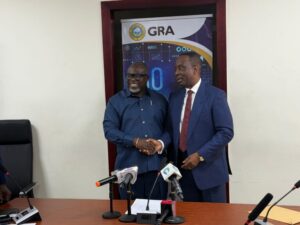
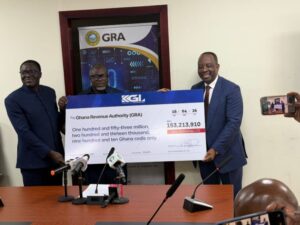
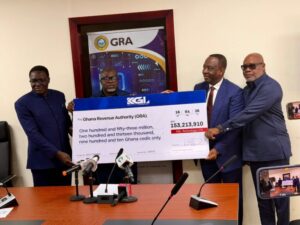
Last week, the KGL Group, led by its Executive Chairman Alex Apau Dadey, demonstrated what it truly means to be a responsible corporate citizen. The company paid a staggering GHS 153 million in corporate income tax to the Ghana Revenue Authority at a compliance presentation in Accra.

This is not just impressive it is instructive.

In an economy where many state-owned enterprises struggle with efficiency and accountability, KGL’s contribution stands as a benchmark. It challenges both public and private sector institutions to rethink their commitment to national development. If ten indigenous companies matched this level of compliance annually, Ghana would be looking at over GHS 1.5 billion in tax revenue funds that could transform infrastructure, healthcare, and education.

The significance of this moment goes beyond the cheque presented. It reflects a philosophy one rooted in responsibility, discipline, and long-term value creation.

“As a company, we do not see tax as a burden,” Mr. Dadey noted during the presentation. “It is our contribution to the national purse our way of giving back to the society that enables our success.”

That mindset is rare and necessary.

In 2025 alone, KGL reportedly made direct payments totaling GHS 350 million to the state, including GHS 180 million to the National Lottery Authority. These figures underscore a deeper truth: indigenous Ghanaian businesses, when properly structured and supported, can be powerful engines of national growth.

Beyond taxation, KGL’s footprint in social investment is equally noteworthy. Through the KGL Foundation, the group has committed over GHS 40 million to community development initiatives. Its support for the Ghana national football team and grassroots football, alongside infrastructure projects such as the KGL–EVE Medical Centre in Kumasi and the Alex Dadey Alumni Centre at the University of Ghana, reflects a holistic approach to nation-building.

This is what responsible capitalism should look like.

Ghanaians are quick to rally behind foreign brands, yet often hesitant to fully support local enterprises. But companies like KGL are making a compelling case for a shift in mindset. They are proving that indigenous businesses can be transparent, compliant, and impactful—without compromising on ambition or scale.

The lesson is clear: Ghana does not lack capable businesses. What it needs is an enabling environment that nurtures them fair regulation, policy consistency, and national support.

KGL has shown the way. The question now is whether others will follow
Latest stories