
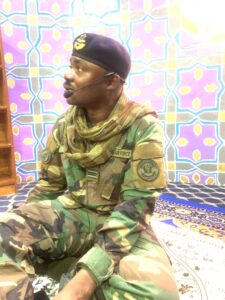
A Friday sermon delivered by Flight Lieutenant Moucharoudine Siddique Maiga, Imam of the Ghana Air Force, has called on Ghanaians to uphold national unity by preserving the country’s long-standing tradition of religious tolerance and constitutional neutrality, using developments in neighboring Burkina Faso as a case study.
Addressing worshippers during the congregational prayers, the Imam reflected on reports that Burkina Faso’s transitional leader, Captain Ibrahim Traoré, had declined to institutionalize Sharia. He urged the public not to interpret the reported decision as hostility toward Islam, arguing instead that it illustrates the difficult balance leaders must strike between religious conviction, constitutional governance, and national cohesion.
According to the Imam, the issue should not be viewed as a rejection of Islamic principles but as an example of the broader responsibility of governments to ensure that public institutions remain inclusive in religiously diverse societies.
“The concern is not Sharia itself,” he explained during the sermon. “Sharia remains an integral part of Islamic jurisprudence and a source of guidance for millions of Muslims around the world. The greater concern is preventing its possible misuse by individuals or groups who may seek to justify violence, oppression, or extremism in its name.”
He observed that Burkina Faso continues to confront significant security challenges arising from terrorism and violent extremism, making national unity and social cohesion critical components of state policy.
Turning to Ghana’s political and constitutional landscape, the Imam noted that Ghana has earned international recognition for maintaining peaceful coexistence among Muslims, Christians, and followers of African Traditional Religions. He said this harmony has been strengthened by the country’s constitutional commitment to freedom of religion and equal citizenship rather than state preference for any particular faith.
He cautioned that Ghana’s democratic stability should never be taken for granted.
“Our diversity is one of our greatest strengths,” he said. “That strength must be protected by ensuring that no government—regardless of the religious beliefs of its leaders—is perceived as governing for one religious community above others.”
The Imam further observed that expecting political leaders to legislate according to their personal religious beliefs could create precedents with unintended consequences. He noted that if one administration were expected to reshape national laws according to one religion, future governments led by people of different faith traditions might feel equally justified in pursuing similar policies, potentially weakening national cohesion and constitutional order.
Drawing upon Islamic teachings, the sermon referenced Qur’an 2:256, which states, “There is no compulsion in religion.” The Imam explained that many Muslim scholars understand this verse as affirming freedom of belief and reflecting Islam’s enduring principles of justice, mercy, wisdom, and peaceful coexistence.
He emphasized that Muslims remain free to observe their religious obligations and personal religious laws within the framework established by national constitutions, while governments equally bear the responsibility of protecting every citizen’s right to worship freely without coercion or discrimination.
Using Burkina Faso as a regional example rather than an isolated political event, the Imam encouraged Ghanaians to appreciate the value of constitutional neutrality as a safeguard for all religious communities. He said that the preservation of peace depends not on elevating one faith above another but on ensuring justice, equal protection under the law, and mutual respect among citizens.
The sermon concluded with an appeal for religious leaders, policymakers, and citizens to reject attempts to politicize religion for partisan or ideological purposes. Instead, the Imam urged all stakeholders to continue nurturing the culture of interfaith dialogue and constitutional governance that has distinguished Ghana as one of West Africa’s most stable democracies.
Observers noted that the message resonated beyond the immediate developments in Burkina Faso, presenting them as an opportunity for reflection on the importance of protecting religious freedom, constitutional order, and national unity across the region.

