HomeBusinessMedia Workshop Explores Human Rights Violations in Mining Communities

Media Workshop Explores Human Rights Violations in Mining Communities

Date:

Related stories

GoldBod Generates US$1.011bn From Gold Trade

The Ghana Gold Board (GoldBod) generated US$1.011 billion in...

UGEL, Private Hostels Ordered to Refund Excess Rent

The Rent Control Department (RCD) has directed the University...

GPHA Fire and Safety, LCB Worldwide Ghana Crowned Champions, 2026, LCB, Corporate, Games 

  The Ghana Ports and Harbours Authority (GPHA) Fire and Safety Team and LCB Worldwide Ghana Football Team have emerged champions of the 2026 LCB Corporate Games in the Tema and Accra Zones respectively, following weeks of competitive football action. The grand finale of the fifth edition of the competition was held on Saturday, October 31, 2026, at Mexico Park, Community 2, Tema, bringing together participating companies from the ports and shipping industry and other sectors. In the Tema Zone final, GPHA Fire and Safety secured a narrow 1-0 victory over the Ghana National Fire Service (GNFS) Team to clinch the ultimate title. In another decisive encounter, LCB Worldwide Ghana delivered an impressive performance in the Accra Zone, thrashing the Ghana Immigration Service Team 5-0 to emerge champions. The final standings saw LCB Worldwide Ghana finish first in the Accra Zone, followed by the Ghana Immigration Service in second place, while Manna Team settled for third. In the Tema Zone, GPHA Fire and Safety claimed the top spot, with the Ghana National Fire Service finishing as runners-up and Wilmar Africa taking third place. Winners Take Home Cash Prizes  The victorious teams were rewarded with cash prizes in recognition of their performances. The champions in both zones received GH¢20,000 each, while the first runners-up took home GH¢10,000 each. The second runners-up were also rewarded with GH¢5,000 each. Individual awards were presented to outstanding performers, with the tournament's top scorer receiving GH¢2,000 and the Best Goalkeeper taking home GH¢1,000. 16 Teams Compete in Fifth Edition  A total of 16 teams, comprising eight teams from each zone, participated in this year's competition, which featured several weeks of exciting football action. The Accra Zone participants included the Ghana Union of Traders (GUTA), Ghana Institute of Freight Forwarders (GIFF), LCB Worldwide Ghana, Ghana Immigration Service, Aviance, Mariners, Manna and Conquerors. The Tema Zone was represented by Port Hub, GPHA Fire and Safety, Ghana National Fire Service, GPHA Mechanical, Ezeylinks, Wilmar Africa, Tema Metropolitan Assembly (TMA) and Ghana Dock Labour Company Limited (GDLC). LCB Eyes Expansion of Corporate Games  Speaking to the media on the sidelines of the grand finale, a representative of the Human Resource Department at LCB Worldwide, Solomon Dwamena Aboagye expressed satisfaction with the performance of the participating teams and the overall impact of the competition. He noted that the objectives behind organising the games had consistently been achieved over the years, adding that LCB Worldwide Ghana remained committed to expanding the initiative to attract more corporate organisations. “We are hoping that in the next few years, the participating companies will be more. We are hoping to bring companies from other industries. We are expecting the financial institutions, oil and gas companies and even the educational sector as well,” he said. Mr. Aboagye further disclosed that the competition was fully sponsored by LCB Worldwide Ghana, expressing optimism that the company would continue to mobilise resources to sustain and increase the prize money in subsequent editions. Promoting Corporate Unity Through Sports  The LCB Worldwide Corporate Games was initiated to foster camaraderie, strengthen professional relationships and promote bonds of friendship among companies, particularly those operating within the ports and shipping industry. Beyond sports, LCB Worldwide Ghana has also established a strong presence through its corporate social responsibility initiatives. The crisis management company has been operating in Ghana since 2017 and has been contracted by the Government of Ghana, through the Ministry of Health, to undertake fumigation and disinfection of cargo at the country's ports and designated points of entry and exit. As part of its commitment to public health and community development, the company has undertaken fumigation exercises at markets, hospitals, senior high schools and tertiary educational institutions across the country. The successful organisation of the fifth edition of the LCB Corporate Games further underscores the company's commitment to using sports as a platform to promote teamwork, corporate engagement and stronger relationships among businesses in Ghana.  


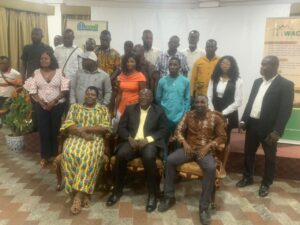
A media workshop on human rights and mining governance has brought together journalists, civil society organizations, and advocacy groups to discuss the impact of large-scale mining operations on affected communities. Organized by the Centre for Public Interest Law (CEPIL) in partnership with Wacam, Oxfam in Ghana, and other stakeholders, the event focused on the Ahafo and Akyem mining projects operated by Newmont Ghana Gold Limited.

The workshop featured the screening of a documentary capturing community perspectives on human rights violations, governance challenges, and environmental degradation caused by mining activities. It also included experience-sharing sessions with journalists covering the extractive sector, interactive discussions, and strategies for strengthening media advocacy on responsible mining.

History of Human Rights Violations in Mining

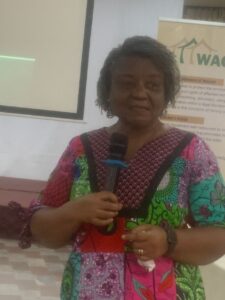
Delivering a presentation on the history of human rights violations in Ghana’s mining sector, Mrs. Hannah Owusu-Koranteng, Associate Executive Director of Wacam, highlighted the long-standing issues of land dispossession, coercion, and environmental destruction by multinational mining companies.

“Human rights violations in mining are not new—they have persisted for decades. Companies continue to coerce people into giving up their lands while promising development that never fully materializes,” she stated.

She further revealed that Ghana ranks third globally in forest cover loss due to mining and environmental factors. “Over 50,000 lands have been lost, and in the past five years, mining activities have only deepened poverty in affected areas,” she noted.

Encouraging journalists to be relentless in their coverage, she cited Wacam’s journey as an advocacy group. “When we started, they called us a ‘husband-and-wife company.’ Today, we are present in over 108 communities across eight regions, making an impact. You, too, can drive change.”

Ensuring Corporate Accountability in the Mining Sector

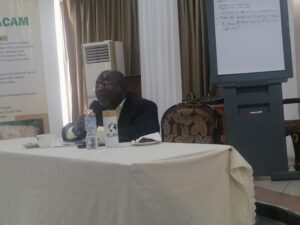
Augustine Niber, Executive Director of CEPIL, emphasizing the need for stronger governance and corporate accountability in Ghana’s mining industry.

“These multinational companies are not charitable organizations. They are here to make a profit, and if left unchecked, they will prioritize profit over people’s well-being,” he remarked.

He called on the government, state institutions, and the media to take a stronger stance in ensuring mining companies adhere to human rights standards and environmental regulations.

“What we do with our natural resources matters. If managed well, they can drive sustainable development. If mismanaged, they will only deepen inequalities,” he added.

Mining’s Economic Impact vs. Community Challenges

Gold mining remains a key contributor to Ghana’s economy, generating $6.38 billion in foreign exchange earnings in 2022 and accounting for 3.9% of GDP. However, mining communities continue to grapple with water contamination, land displacement, and deforestation, leading to worsening socio-economic conditions.

Despite existing regulatory frameworks such as the UN Guiding Principles on Business and Human Rights (UNGPs)—which mandate businesses to avoid human rights violations—many mining communities still face disruptions to agriculture, inadequate compensation, and limited access to basic social amenities like clean water, healthcare, and education.

Strengthening Media’s Role in Mining Advocacy

The workshop aimed to equip journalists with the tools and knowledge to enhance their reporting on human rights and governance in the extractive sector. Participants, drawn from print, broadcast, and digital media houses, discussed strategies to:

Amplify the voices of affected communities through investigative journalism.

Promote transparency and accountability in Ghana’s mining sector.

Encourage responsible mining practices that balance economic growth with human rights protection.

Strengthen collaborations between journalists and civil society organizations to push for policy reforms.

By the end of the workshop, participants agreed that sustained media engagement is crucial in holding mining companies and government agencies accountable. Journalists were urged to continue exposing injustices and advocating for policies that ensure mining benefits both the economy and the people living in resource-rich communities.
Latest stories