
HomeBusinessDennis A. Keelson Writes-Empowering Lives: Wacam’s VSLA Contributors in Ayensukrom Invest in...

Dennis A. Keelson Writes-Empowering Lives: Wacam’s VSLA Contributors in Ayensukrom Invest in a Brighter Future

Date:

Related stories

Local Government Minister Commends DRIP Team for Progress at IRECOP Waste Evacuation Site

  The Minister for Local Government, Chieftaincy and Religious Affairs,...

Hon. Mahama Ayariga hands over 20 waste collection tricycles on behalf of the AMA

  The Minister for Local Government, Chieftaincy and Religious Affairs,...

Local Government Ministry directs assemblies to verify billboard permits nationwide

  The Ministry of Local Government, Chieftaincy and Religious Affairs...

Hon. Ayariga hands over Honda motorcycles to boost Aayalolo contra-flow ahead of Christmas

  Efforts to ease rush-hour congestion in Greater Accra have...

BEYOND EARLY DETECTION: WHAT HAPPENS AFTER A BREAST CANCER DIAGNOSIS? 

  Breast cancer awareness must go beyond pink ribbons, screening campaigns and calls for early detection. Ghana must also confront whether its health system is adequately prepared to care for those who receive a diagnosis. Every October, pink ribbons, awareness campaigns and screening activities remind us of the importance of early detection in the fight against breast cancer. Across workplaces, churches, communities and health facilities, women are encouraged to examine their breasts, attend screening programmes and seek medical attention when they notice unusual changes. These messages are important. Early detection can improve treatment outcomes and save lives. But after losing someone I cared deeply about to breast cancer, I have found myself reflecting on a question that deserves equal attention: What happens after early detection? Let me call her Abena. Abena was a woman in her late thirties, a working professional who had spent more than a decade advocating for breast cancer awareness. She organised screening activities within her church and workplace and encouraged other women to take their breast health seriously. She understood the importance of early detection and actively promoted it. In August 2023, she discovered a lump in her armpit. An initial ultrasound examination reportedly indicated that the finding was benign. However, the swelling persisted, and a month later she noticed changes in her left breast. Further investigations, including biopsy, eventually confirmed breast cancer in November 2023. What followed was a difficult journey through the healthcare system. The physician who requested the investigations had travelled outside the country by the time the results became available. Abena was asked to wait until the physician returned before a referral could be made to the next level of care. Eventually, a colleague facilitated the referral. At the oncology unit, she was informed that the workload was high and that an arrangement described to her as "intramural" payment could secure an earlier appointment. Without this payment, her first appointment would have been in February 2024. She paid and was seen that same day. Subsequent review visits also involved additional payments.   The financial demands did not end with securing appointments. Each chemotherapy session cost approximately GH¢2,000, while a supportive injection administered after each session cost about GH¢900 at the time. The medication was provided for administration by health workers at a nearby facility. Abena completed eight cycles of chemotherapy and was preparing for a total mastectomy. Throughout this period, her health deteriorated. She experienced significant complications, including loss of sight and speech, and eventually died in June 2024. Yet, even while battling the illness, she managed to complete her Master of Laws programme. Her determination to keep going remains one of the things I remember most about her. I share Abena's story not to suggest that every aspect of her care was inappropriate or that one experience represents the entire health system. Neither can I establish that the challenges she encountered alone determined the outcome of her illness. However, her experience raises difficult questions about access, affordability, referral coordination and the support available to patients navigating serious illnesses in Ghana. A diagnosis should mark the beginning of a coordinated response, not the beginning of another struggle to find care. BEYOND AWARENESS: EXAMINING THE HEALTH SYSTEM  Early detection is only one part of the cancer care pathway. Following a suspicious finding, patients need timely diagnostic investigations, clear communication of results, appropriate referral, specialist consultation, treatment and continuous follow-up. These services must work together. Delays at any point can create additional anxiety, financial pressure and uncertainty for patients. This is particularly important when viewed against Ghana's commitment to achieving Universal Health Coverage (UHC) by 2030. The Sustainable Development Goals, especially SDG 3, call on countries to ensure healthy lives and promote well-being for all ages. Target 3.8 specifically commits countries to universal health coverage, including access to quality essential healthcare services, affordable medicines and financial risk protection. These commitments must translate into meaningful experiences for people who seek care. Universal health coverage cannot be measured simply by the number of people who enter a health facility or the availability of screening services. It must also be reflected in whether patients receive the right diagnosis at the right time, whether referrals lead to actual access to care, whether treatment is affordable and whether continuity of care is assured. The question is not only whether we can detect diseases early, but whether our health system is prepared to respond effectively when we do. Patient navigation is one area that deserves greater attention in strengthening cancer care. Nurse navigators play an important role in helping patients move through what can be a complex and overwhelming healthcare pathway. They support coordination of appointments and referrals, facilitate communication between patients and healthcare providers, help identify financial and psychosocial barriers and promote continuity throughout treatment. Ghana has made efforts to introduce and strengthen patient navigation services. However, we must look beyond the existence of individual initiatives and ask questions about their reach and sustainability. How many breast cancer nurse navigators are available across the country? How many have undergone structured, competency-based training in patient navigation? Are these services accessible to patients outside the major tertiary hospitals? Do we have adequate systems for their deployment, supervision and continued professional development? A patient navigator should not merely direct a patient from one department to another. The role requires the knowledge and skills to coordinate care, anticipate barriers and help ensure that patients are not lost along the treatment pathway. Strengthening this service should therefore form part of our broader investment in cancer care. The challenges highlighted by Abena's experience are also not exclusive to cancer. Patients living with hypertension, diabetes, stroke, kidney disease and other chronic conditions face similar needs for timely diagnosis, appropriate referral, affordable medicines, regular monitoring and continuity of care. As the burden of non-communicable diseases continues to increase, the demands on our health system will become even greater. This is therefore a broader health-system concern. We need to examine how effectively our services are organised to support patients from the point of first contact through diagnosis, treatment, rehabilitation and follow-up. The ability to provide continuous, coordinated and person-centered care must become a central measure of the quality of our healthcare delivery. TURNING POLICY COMMITMENTS INTO PATIENT EXPERIENCES  Ghana's Free Primary Healthcare initiative presents an opportunity to strengthen access to essential services, improve early identification of health conditions and reduce barriers at the primary healthcare level. Similarly, the Ghana Medical Trust Fund offers an opportunity to address some of the financial challenges associated with serious and chronic illnesses. These are important interventions, but their impact will depend on how effectively they connect with the wider health system. Expanding access to primary healthcare must be accompanied by adequate diagnostic capacity, functional referral systems, specialist services, essential medicines and a health workforce equipped to provide quality care. Financial support must also translate into access to the actual services patients need and when they need them. We must be careful not to create a situation where patients are encouraged to seek early care but encounter delays, prohibitive costs or limited treatment options once a serious diagnosis is confirmed. Access to healthcare should not end at the point of screening or diagnosis. It must extend throughout the patient's journey. This also calls for deliberate investment in the health workforce. Nurses and midwives are central to patient education, early identification, care coordination, treatment support and follow-up. Their capacity must be strengthened through appropriate training, adequate staffing, supportive working environments and the resources required to deliver quality care. Patient navigation, for instance, should not depend solely on isolated projects or the commitment of a few individuals. It should be deliberately integrated into the organisation of cancer services. BEYOND OCTOBER: A CALL FOR NATIONAL REFLECTION  Breast cancer awareness should not end when October ends. Screening campaigns and public education remain essential, but they must be matched by a health system that can respond to the needs of those who receive a diagnosis. Abena's story is a reminder that behind every diagnosis is a mother, a family and a future that may depend on how effectively the health system responds. It is also a reminder that the success of our health policies should ultimately be judged by the experiences and outcomes of the people they are intended to serve. As a country working towards UHC by 2030, we must move beyond counting the number of people screened, educated or reached through awareness campaigns. We must also ask whether those who need further investigations can access them promptly, whether referrals are completed, whether treatment is affordable and whether patients receive the support required to complete their care. This reflection is in honour of Abena and the souls our health system might have failed. Their stories should challenge us to look beyond awareness and confront the gaps that patients encounter when they need care the most. Early detection is important. But what happens afterwards is equally important. And so, beyond the pink ribbons, the screening campaigns and the annual calls for early detection, I leave us with one question: WHAT'S NEXT AFTER EARLY DETECTION?  I hope this question will spark a much-needed national conversation among policymakers, healthcare professionals, health institutions, civil society, communities and every Ghanaian who depends on the health system. We must collectively examine whether our healthcare delivery system is adequately prepared not only to detect illnesses, but also to provide timely, affordable, quality and continuous care to those who need it. Maame Akosua Serwaa Gyening Email: masagg30@gmail.com  


Article by: Dennis A. Keelson

In the small community of Ayensukrom No. 2, near Bogoso in the Western Region, a remarkable story of empowerment and transformation is unfolding. Defying the odds, the women of Wacam’s Ayensukrom No. 2 Village Savings and Loans Association (uniting 3 VSLA groups) have joined forces to shatter the cycles of poverty and marginalisation, paving the way for a brighter future.

With a total of about 105 members across three VSLA groups, each consisting of approximately 35 women, this collective force is a testament to the power of unity and determination. Together, they are breaking down barriers and building a better tomorrow, one savings plan at a time.

Through the VSLA programme, these women come together to save money, borrow funds, and support one another in their financial journeys. Recently, the group distributed share-outs to its members, and the impact has been remarkable.
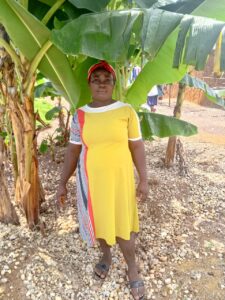
Yaa Baby has successfully built an impressive four-chamber hall facility through her involvement in the VSLA

Investing in Education

Many of the women have used their share-outs to invest in the education of their children, recognising the power of knowledge in shaping a brighter future. Some have paid school fees and bought textbooks for their children.

“Investing in my daughter’s education was a dream come true,’ beams Mrs. Joyce Osei, a member of the VSLA Group 1.

As a proud member of the Ayensukrom VSLA Group 2, Mrs. Osei joined the scheme in 2017. “What I love about the VSLA is the simplicity and ease of joining, as well as accessing loan facilities without cumbersome processes,” she noted.

With her share-out, she paid her daughter’s tuition fees until she completed senior high school, a testament to the impact of collective action on individual lives.

Moreover, her latest share-out of GHC5,950 (including GHC650 interest) has empowered her to expand her business ventures, purchasing a new fufu-grinding machine to complement her already established palm-oil production.
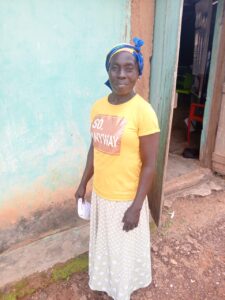
Mrs. Helen Amo’s second-hand clothing business is now booming, thanks to the financial empowerment and support received through the VSLA programme

Improving Livelihoods
Others have invested in income-generating activities, such as farming, trading, or small businesses. This has not only improved their financial stability but also created employment opportunities for others in the community.

According to Madam Juliana Mensah of Ayensukrom VSLA Group 2, she used part of her share-out to expand the sale of her local rice business and also a fraction to purchase a plot of land.

“After joining the VSLA in 2017, I have since stopped taking loans from banks in the community while using some of the money to pay the school fees of my three children.


Mrs. Helen Amo, a member of the VSLA Group 2, has experienced a remarkable transformation in her business fortunes since joining the scheme in 2021.

Initially, she struggled with limited capital, but after receiving a share-out of GHC5,000, she has successfully expanded her second-hand clothing selling business.

What drew her to the VSLA scheme was its flexibility and lack of stringent conditionalities, offering her the financial freedom to grow her enterprise.
With renewed confidence, Mrs. Amo testified to the empowering impact of collective action on individual livelihoods.


Some members use their share-outs to improve their health and wellbeing.
They used some of the money to pay their hospital bills and medicines prescribed by the hospitals.

Yaa Baby who has been in the VSLA Group 3 for 7 years said she uses some of the money to cater for the medical bills of her family. “Thanks to the VSLA, today my family has been able to put up a four-bedroom house,” she happily disclosed.
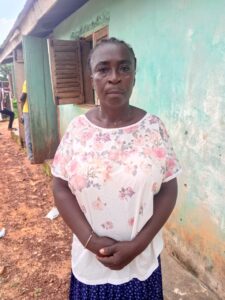
Mrs. Joyce Osei used her share-out to invest in the education of her daughter and also to buy a new fufu-grinding machine to complement her already established palm oil processing venture

Building a Brighter Future
The VSLA programme in Ayensukrom No. 2 serves as a shining example of the transformative power of collective action and financial empowerment. Through collaboration and mutual support, members are empowered to transform their lives and build a brighter future for themselves and their community.

Inspired by its remarkable success, the women enthusiastically praised Wacam, a human rights and environmental mining non-governmental organisation (NGO), for introducing them to the scheme, and eagerly encouraged others to join VSLA groups in their communities, highlighting the numerous benefits that far outweigh any challenges.

As the programme continues to thrive, its impact will leave a lasting legacy for generations to come, a testament to the power of collective action and financial empowerment.

Latest stories