The Wa Naa, His Majesty Fuseini Seidu Pelpuo IV, has described the establishment of the Ghana Medical Trust Fund (GMTF) as a landmark intervention in Ghana’s healthcare history, saying its commitment to supporting people living with non-communicable diseases offers renewed hope to families struggling with the high cost of specialised medical treatment.
He said the Fund represented an important step towards addressing one of the most difficult challenges confronting many Ghanaian households: the financial burden associated with managing chronic illnesses and accessing life-saving specialist care.
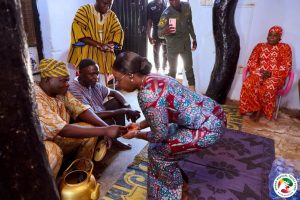
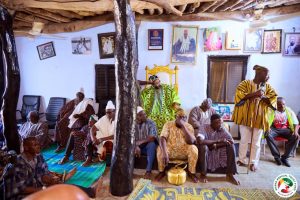
The Wa Naa made these remarks when the Administrator of the Ghana Medical Trust Fund, Adjoa Obuobia Darko-Opoku, and her delegation paid a courtesy call on him at his palace as part of engagements ahead of the Fund’s regional sensitisation tour of the Upper West Region.
He particularly welcomed the decision by the Fund’s leadership to take its message directly to communities, describing the engagement as a meaningful way of ensuring that the benefits of the initiative reach people beyond the major cities.
For the Wa Naa, the importance of the Fund goes beyond financial assistance. It lies in the opportunity to give hope to individuals and families who might otherwise struggle to afford treatment for serious medical conditions.
He commended the Administrator and her team for the initiative and pledged support for the awareness campaign, urging traditional authorities and community leaders to help disseminate information about the Fund to ensure that residents understand and benefit from its interventions.
In her remarks, Ms. Darko-Opoku said the Fund was established to confront the financial barriers that prevent many people living with non-communicable diseases from accessing specialised healthcare.
She explained that the GMTF was working to support eligible patients requiring treatment for conditions such as cancer, kidney disease, cardiovascular conditions and other chronic illnesses that often impose enormous financial and emotional pressures on families.
She noted that the regional sensitisation exercise was not merely an awareness campaign but a deliberate effort to bring information, guidance and the Fund’s services closer to the people, particularly vulnerable populations who may not otherwise know where to seek assistance.
The Administrator emphasised that traditional rulers remained indispensable partners in this effort because of their influence, trusted relationships with their communities and ability to mobilise people around important national health interventions.
She therefore called for the support of the Wa Naa and traditional authorities across the region in identifying information gaps and helping ensure that individuals who qualify for assistance are aware of the processes for accessing support.
The engagement in Wa marks another important step in the Fund’s nationwide stakeholder outreach, as the GMTF strengthens collaboration with traditional institutions, regional authorities, healthcare professionals and communities.
At the heart of the exercise is a commitment to ensure that access to specialised healthcare is not determined by where a person lives or their ability to bear the overwhelming cost of treatment.
For families confronting the realities of chronic illness, the message is simple but profound: help should be within reach, hope should not be beyond their means, and no Ghanaian should be left to face the burden of serious illness alone.