
The Rainforest Alliance has engaged sustainability managers and key stakeholders in discussions aimed at strengthening sustainable cocoa production, protecting forest landscapes and improving the livelihoods of smallholder farmers in Ghana.
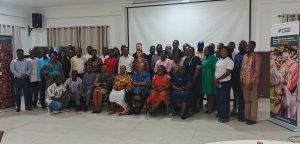
The international non-profit organisation brought together representatives from the cocoa industry, forestry institutions, regulators and other partners in Accra for a stakeholder engagement meeting to discuss the future of sustainable cocoa farming and the implementation of responsible agricultural practices.
The meeting provided a platform to update stakeholders on the organisation’s certification standards, progress across its various landscapes and emerging regional and international regulatory requirements.
Participants were also taken through key regulations and frameworks, including the African Regional Standard (ARS), European Union Deforestation Regulation (EUDR), Rainforest Alliance Certification and Empowering Consumers for the Green Transition (ECGT), to enhance compliance and promote responsible business practices in Ghana.
Country Director of Rainforest Alliance Ghana, Nicholas Jengre, said the organisation’s mission is to create more sustainable communities by harnessing social and market forces to protect nature and improve the livelihoods of farmers and forest communities.
He said the organisation is reviewing its certification standards based on feedback from partners, with the revised standards expected to be published in March 2027.
Mr. Jengre explained that Rainforest Alliance has already put measures in place to support partners in complying with the EUDR, which seeks to prevent products linked to deforestation from entering the European Union market.
He said the engagement is also intended to gather feedback from stakeholders and ensure that certification requirements translate into tangible benefits for farmers.
Mr. Jengre stressed that stronger certification systems and compliance with international regulations are necessary to safeguard farmers’ access to international markets.
On farmers’ income, he acknowledged that although the recent introduction of a legal framework for cocoa pricing by the Ghana Cocoa Board is encouraging, the current price structure might not be sufficient to close the living income gap.
He called for cocoa prices to be pegged to hard currencies to protect farmers against fluctuations in the local currency.
Mr. Jengre also encouraged farmers to adopt regenerative agricultural practices, including proper pruning, timely weeding and harvesting, to improve productivity and increase their earnings. Chairman of the Landscape Management Board (LMB) for the Sui River Landscape in the Western North Region, Brafi Isaac, said the board is working with communities to promote regenerative agriculture, forest restoration and sustainable local economies.
He explained that the Sui River Landscape covers approximately 382,000 hectares, including five forest reserves, making it one of West Africa’s important cocoa-growing areas.
The engagement forms part of Rainforest Alliance’s broader efforts to strengthen collaboration among industry stakeholders and promote sustainable agricultural practices that protect forests while improving the livelihoods of cocoa-growing communities.
Story by:
Nana Yaw Reuben
The Rainforest Alliance has engaged sustainability managers and key stakeholders in discussions aimed at strengthening sustainable cocoa production, protecting forest landscapes and improving the livelihoods of smallholder farmers in Ghana.
The international non-profit organisation brought together representatives from the cocoa industry, forestry institutions, regulators and other partners in Accra for a stakeholder engagement meeting to discuss the future of sustainable cocoa farming and the implementation of responsible agricultural practices.
The meeting provided a platform to update stakeholders on the organisation’s certification standards, progress across its various landscapes and emerging regional and international regulatory requirements.
Participants were also taken through key regulations and frameworks, including the African Regional Standard (ARS), European Union Deforestation Regulation (EUDR), Rainforest Alliance Certification and Empowering Consumers for the Green Transition (ECGT), to enhance compliance and promote responsible business practices in Ghana.
Country Director of Rainforest Alliance Ghana, Nicholas Jengre, said the organisation’s mission is to create more sustainable communities by harnessing social and market forces to protect nature and improve the livelihoods of farmers and forest communities.
He said the organisation is reviewing its certification standards based on feedback from partners, with the revised standards expected to be published in March 2027.
Mr. Jengre explained that Rainforest Alliance has already put measures in place to support partners in complying with the EUDR, which seeks to prevent products linked to deforestation from entering the European Union market.
He said the engagement is also intended to gather feedback from stakeholders and ensure that certification requirements translate into tangible benefits for farmers.
Mr. Jengre stressed that stronger certification systems and compliance with international regulations are necessary to safeguard farmers’ access to international markets.
On farmers’ income, he acknowledged that although the recent introduction of a legal framework for cocoa pricing by the Ghana Cocoa Board is encouraging, the current price structure might not be sufficient to close the living income gap.
He called for cocoa prices to be pegged to hard currencies to protect farmers against fluctuations in the local currency.
Mr. Jengre also encouraged farmers to adopt regenerative agricultural practices, including proper pruning, timely weeding and harvesting, to improve productivity and increase their earnings. Chairman of the Landscape Management Board (LMB) for the Sui River Landscape in the Western North Region, Brafi Isaac, said the board is working with communities to promote regenerative agriculture, forest restoration and sustainable local economies.
He explained that the Sui River Landscape covers approximately 382,000 hectares, including five forest reserves, making it one of West Africa’s important cocoa-growing areas.
The engagement forms part of Rainforest Alliance’s broader efforts to strengthen collaboration among industry stakeholders and promote sustainable agricultural practices that protect forests while improving the livelihoods of cocoa-growing communities.
Story by:
Nana Yaw Reuben

