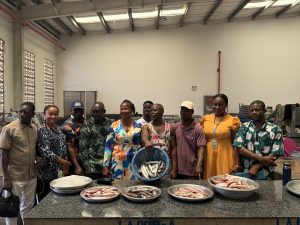
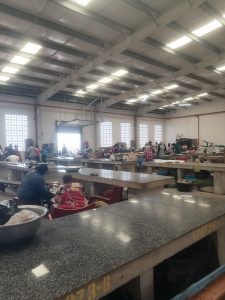
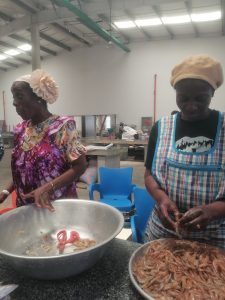
The James Town Fishing Harbour has adequate facilities to support safe and hygienic fish trading, but fish sellers operating along the shoreline have been urged to move into the designated market to improve sanitation and order at the facility.
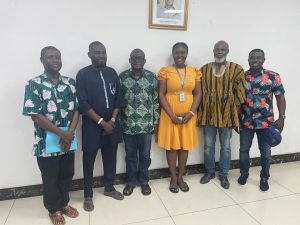
The Harbour Manager of the James Town Fishing Harbour of the Ghana Ports and Harbours Authority (GPHA), Engineer Stephen Awuah, said the market was specifically provided to create an organised and hygienic environment for women and other fish traders.
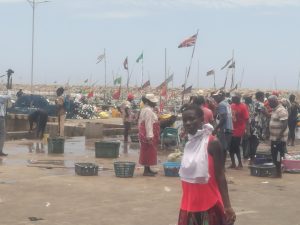
He expressed concern that some traders continued to sell and process fish outside the designated market despite the availability of rooms and other facilities within the market.
According to him, stronger enforcement was required to ensure that fish sellers operated from the designated market and that the harbour was used for its intended purpose.
“One major thing we wish to be reviewed is the enforcement of the people to go into the market to sell fish,” Engineer Awuah said.
He explained that GPHA had provided the necessary infrastructure to facilitate hygienic fish trading and expected traders to make full use of the facilities.
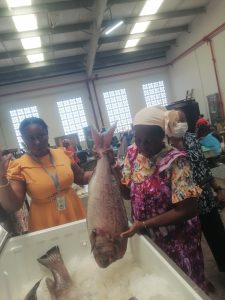
His comments come at a time when fishing activity at the harbour has increased following the opening of the fishing season, resulting in what he described as a bumper catch.
The increased volume of fish, he said, had also contributed to challenges in managing the number of people operating around the harbour.
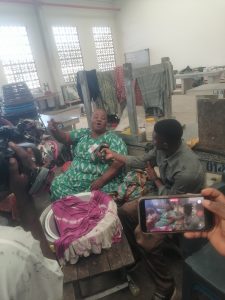
Engineer Awuah said management was engaging stakeholders, including the Chief Fisherman, to address concerns raised by some traders regarding the traditional processes associated with the opening of the market.
He expressed optimism that once the processes were completed, all fish sellers would move into the designated market.
The Harbour Manager also defended the sanitary facilities at the harbour, noting that the facility had systems for managing wastewater and a waste treatment plant.
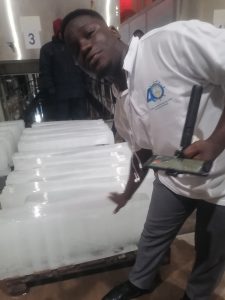
He said the harbour also had one of the biggest ice plants along the coast, with a production capacity of 60 tonnes and storage capacity of 600 metric tonnes.
The ice plant, he explained, supplied fisherfolk and fish sellers at the harbour while also serving customers from outside the community.
However, Engineer Awuah identified the short breakwater and shallow waters as major challenges confronting the harbour.
He said the short breakwater contributed to the accumulation of plastic waste in the harbour, while the shallow waters prevented trawlers from fully utilising the facility.
According to him, GPHA was considering extending the breakwater and dredging the harbour to deepen the waters and facilitate the operation of trawlers.
He explained that the projects were capital-intensive, with management currently working on estimates and budgetary requirements, and indicated that visible action could be expected within the next two to three years.
Engineer Awuah further called for stronger enforcement of regulations against harmful fishing practices, including the use of chemicals and unapproved fishing nets.
He said the responsible fishing practices demonstrated at Jamestown should be encouraged and replicated in other fishing communities across the country.
He also called for private-sector participation in dredging the harbour to enable the full utilisation of the infrastructure and facilities provided.
GARDJA strengthens conservation campaign
The concerns raised at the Jamestown Fishing Harbour come against the backdrop of growing efforts by the Ghana Agricultural and Rural Development Journalists Association (GARDJA) to use journalism to promote sustainable fishing and marine conservation.
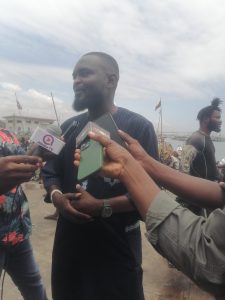
The Projects Coordinator of GARDJA, Nana Yaw Kesseh, said the association was focusing on the fishing industry through media campaigns aimed at exposing illegal fishing practices and promoting sustainable marine conservation in Ghana.
He said the association’s six-month nationwide Save Our Sea (SOS) Campaign, being implemented in partnership with the Earth Journalism Network, was designed to strengthen advocacy and promote accountability among stakeholders in the fishing industry.
According to him, participating journalists had been visiting coastal communities, including communities in the Greater Accra and Central regions, to engage directly with artisanal fishers, fishmongers and their management structures.
Nana Yaw said the initiative was helping to highlight the impact of declining fish stocks on food security and the livelihoods of coastal communities, while generating credible evidence that could guide policymakers.
“The initiative is to support the country’s efforts to achieve the 30×30 conservation target by 2030 in line with the Kunming-Montreal Global Biodiversity Framework,” he said.
He explained that the campaign sought to place the experiences and concerns of coastal communities at the centre of national conversations on sustainable fisheries and marine conservation.
Nana Yaw expressed appreciation to the Earth Journalism Network for its funding support, describing it as a “critical investment in journalism-driven environmental protection and sustainable development.”
The combined concerns over sanitation, harbour infrastructure, illegal fishing and declining fish stocks underscore the need for coordinated action among harbour authorities, fisherfolk, fish traders, traditional leaders, government agencies, journalists and the private sector to protect Ghana’s marine resources while safeguarding the livelihoods of coastal communities.