HomeBusinessCrystal Heights Sweeps Pearson Awards With 26 Wins

Crystal Heights Sweeps Pearson Awards With 26 Wins

Date:

Related stories

When Water Becomes Scarce, Animal Health Becomes a Public Health Concern

  By Jonathan Akwabeng Manu The Harmattan season is here again....

Ghana Makes History With 6.5m Carbon Credits 

  Ghana has made history as the first African country and the third globally to secure verified forest carbon credits under the international Architecture for REDD+ Transactions (ART), marking a major breakthrough in its efforts to combat climate change and protect forest resources. The country has received approximately 6.5 million tonnes of verified emission reductions under ART’s REDD+ Environmental Excellence Standard (TREES), following nearly two decades of sustained efforts to reduce deforestation and forest degradation. The Minister for Lands and Natural Resources, Honourable Emmanuel Armah-Kofi Buah, announced the achievement during a media briefing at the Ministry’s conference room on November 23, 2026. He said the approval, granted on November 10, 2026, represented a significant national achievement and recognition of Ghana’s commitment to forest conservation. According to the Minister, the milestone was the product of sustained efforts by successive governments since 2008 to protect the country's forest resources and address the growing threats posed by climate change. “We have taken this journey since 2008. Successive Governments have contributed to making sure we continue to protect our forests,” he said. Chief Executive of the Forestry Commission, Dr Hugh C.A. Brown, explained that the credits were earned through measurable reductions in emissions resulting from deforestation and forest degradation. He stressed that the credits were not automatically allocated to Ghana but were issued after the country demonstrated verifiable results through extensive monitoring, reporting and independent assessment. “These credits were not simply allocated to Ghana. They were earned through results that had to be achieved, measured, reported, independently validated, and verified,” he stated. Dr Brown said the achievement positioned Ghana prominently in the international carbon market and demonstrated the country's capacity to meet rigorous global standards for forest conservation. He disclosed that the credits cover emission reductions achieved between 2017 and 2021, with the next monitoring period expected to cover 2022 to 2026. He, however, cautioned that the sustainability of the achievement would depend on Ghana's ability to address persistent threats to forest resources, particularly illegal mining, illegal logging, wildfires and unsustainable agricultural practices. The Forestry Commission Chief Executive assured that the Commission would continue collaborating with the Government, traditional authorities and local communities to protect forests and sustain the country's carbon credit performance. The achievement is expected to strengthen Ghana's participation in international climate finance initiatives while creating opportunities to attract additional resources for forest protection and community development.

BEYOND TEENAGE PREGNANCY: SAFEGUARDING GIRLS’ EDUCATION AND FUTURE 

  By Ms. Lordina Amponsah Badu (UEW Teaching Intern), Mr. Isaac Nyarko Antwi (Ghana Education Service Tutor), and Ms. Michealla Koduah (UEW Teaching Intern) All three writers are affiliated with Kumasi Girls’ Senior High School, Kumasi, Ghana.  Introduction How would one feel if their daughter became pregnant, thereby crushing her future? Considering the investments parents make in their children's education, every parent hopes to see their girl child climb the academic ladder. Thus, every girl deserves the opportunity to dream, learn and build a future without having her aspirations cut short by circumstances beyond her control. Yet, across Ghana, teenage pregnancy continues to threaten the future of our young girls, and this needs serious attention. The seriousness of this problem is reflected in recent statistics released by the Ghana Health Service. According to data from the Ghana Health Service's routine Health Information System, Ghana recorded 53,415 adolescent pregnancies at health facilities between January and July 2026. Of these, 1,501 involved girls aged between 10 and 14, while 51,914 involved girls aged between 15 and 19. These figures highlight the urgent need for coordinated interventions to protect adolescent girls and safeguard their educational opportunities. The situation demands urgent intervention from parents, teachers, school authorities, religious leaders, policymakers and the wider community. How Teenage Pregnancy Affects Girls' Education Teenage pregnancy has a serious effect on a girl’s academic performance, school attendance, educational aspirations and chances of completing her education. A pregnant girl finds it difficult to concentrate in class, misses lessons and fails to complete assignments, so her academic performance drops. Her attendance also becomes irregular because of shame, stigma from her peers, or health problems. After giving birth, many girls stay home to nurse their babies and never return. Even those who return have their educational aspirations affected. A girl who once dreamed of becoming a nurse, teacher, or lawyer may begin to feel that her dream is over. She loses confidence and motivation because of negative social perceptions. Although the Ghana Education Service Re-entry Policy allows pregnant girls to return to school after delivery, poverty, lack of childcare and stigma make completion very difficult. Teenage pregnancy therefore increases school dropout rates and reduces a girl’s chances of building a better future. The Role of Teachers in Protecting Adolescent Girls Teachers can play an important role in protecting adolescent girls because they may serve as approachable and trusted adults to whom girls can report harassment, exploitation and other safeguarding concerns. They can educate female students on sexual harassment. These behaviours include older men offering money, gifts, transport, food or help with examinations in exchange for sex, unwanted touching, pressure, and threats. Many girls mistake these actions for love due to ignorance, so they need to be taught the difference. Teachers can also teach girls how to resist. They can teach them to prioritise their bodies and education. They should stand firm and say no to unwanted sexual advances which can lead to pregnancy. Teachers should also encourage girls to report anyone who engages in such behaviour. They must create a safe and private space where a girl can talk without fear. They must listen without blaming, keep the matter confidential, and link the girl to the Guidance and Counselling Coordinator, the headmistress, the Domestic Violence and Victim Support Unit (DOVVSU), or Social Welfare. A female teacher must never keep abuse secret to protect the abuser. Parental Responsibility in Preventing Teenage Pregnancy Parents also have a major responsibility, yet many parents make mistakes when discussing puberty, relationships and personal safety with their daughters. The first mistake of parents is that they believe discussions about sexual matters are meant only for adults. Some parents use fear and threats against their own children. They only shout, “Don’t bring pregnancy home!” or “If a boy touches you, I will beat you.” This creates fear, not understanding. The girl will hide her problems instead of asking for help when she is in trouble. The second mistake is late discussion. Many parents wait until the girl has already started menstruating or is already in a relationship. By then, it is too late. Another mistake is failure to discuss boys, money and consent. Parents fail to explain that accepting money, gifts or rides from men can lead to sexual demands. These mistakes expose girls to vulnerability because a girl who does not understand her body, menstruation and safe boundaries cannot protect herself from what she does not understand. Creating Safe School Environments Schools must also create safe environments for girls to report sexual harassment and abuse, while ensuring that pregnant teenagers and teenage mothers are supported to continue their education. A safe school must have a clear reporting system. There should be a reporting box, a trusted female counsellor and a Child Protection Committee. Reports must be treated confidentially and acted upon quickly. No teacher should protect an abuser. The school must also have zero tolerance for harassment by students, teachers or outsiders. Girls must see that reporting leads to action, not punishment for the victim. At the same time, schools must support pregnant girls. They must implement the GES Re-entry Policy by allowing the girl to go on maternity leave and return after delivery. She must not be expelled or shamed. The school should provide counselling and a flexible timetable. Schools should also connect vulnerable girls and their families to scholarships, LEAP and other forms of community support. A school is truly safe when a girl knows that if she reports, she will be believed and protected, and if she becomes pregnant, she will not be thrown away. Practical interventions to reduce teenage pregnancy To reduce teenage pregnancy, prevent interrupted education and protect the future of adolescent girls in Ghana, three practical interventions are recommended. The first intervention is comprehensive sexuality education in schools. Beyond teaching abstinence, authorities in the various schools must equip our young girls with practical skills needed to understand their changing bodies, establish personal boundaries and protect themselves from sexual exploitation. Trained teachers and peer educators should deliver these lessons. Girls' empowerment and economic support are another important intervention that can prevent teenage pregnancy. Girls should be kept in school through Free SHS, scholarships, school feeding, provision of sanitary pads and skills training. Mentorship programmes and girls’ clubs led by female teachers can also build confidence and self-esteem. The third intervention is strong law enforcement. Parents, chiefs, pastors and imams must be educated to protect girls, not blame them. Laws against child marriage, defilement, and sexual exploitation must be enforced. Reporting must be made easy, and perpetrators must be punished. At the same time, teenage mothers must be supported to return to school through the Re-entry Policy. Conclusion In conclusion, teenage pregnancy is not only a health problem; it is an educational, social and human rights problem. It negatively affects academic performance, reduces attendance, kills aspirations and prevents girls from completing their education. Female teachers must help girls to recognise, resist and report exploitation. Parents must break the silence and talk to their daughters early, honestly and with love. Schools must put in place good structures to create safe reporting systems and support pregnant girls and teenage mothers to continue their education. If Ghana implements comprehensive sexuality education, teenage pregnancy will reduce, girls will stay in school, and the future of adolescent girls will be protected.  

MUSEC Suspends Mining At Kwabedu Over Galamsey Complaints

  By Martin Osei Tutu The Tarkwa Nsuaem Municipal Security Council...

Petroleum Workers Threaten Nationwide Strike Over NPA Bill

By Martin Osei Tutu, Tema The National Chairman of the...


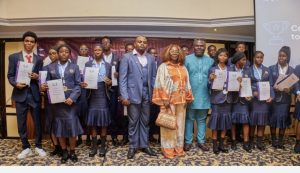
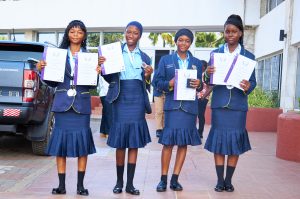
Crystal Heights International School has delivered a stunning performance at the 2026 Outstanding Pearson Learner Awards in Accra, winning an impressive **26 out of the 34 awards presented**, with 12 of its students recording the highest marks in the world in their respective examination categories.

The remarkable feat places the school at the forefront of Ghana’s academic excellence, accounting for more than 76 per cent of all awards presented at the ceremony and reinforcing its growing reputation as a leading institution for international-standard education.

In an extraordinary demonstration of academic brilliance, the school produced students who emerged as world, African and Ghanaian top performers in various Pearson Edexcel examinations, making the 2026 awards a memorable milestone for the institution.

The 12 world-highest marks represent one of the most remarkable highlights of the school’s performance, particularly in iLower Secondary Mathematics, where several students distinguished themselves on the international stage.

The awards were secured across three academic levels: 16 at iLower Secondary, one at iPrimary and nine at the International General Certificate of Secondary Education (iGCSE) level.

12 STUDENTS REACH THE TOP OF THE WORLD

Among the outstanding achievements were students who secured the highest marks globally in their respective subjects.

The world-highest performers included Musharafatu Abubakari, Kirsten Nana Addo Dakwa, Chris Anobaah Baiden, Chelsea Vedette Tindanbil, Aisha Issah Zakane, Karsten Amoako Donkor, Nana Kwaku Ofori Dei Boadu, Vivian Oparebea Ahwireng, Nana Kweku Afrifa Ampabeng, Edwin Amponsah Stephenson, Yenpang Bewong, and Mary Abugah Anuweh Wepiah.

Their exceptional performance, particularly in iLower Secondary Mathematics, underscores the school’s strong emphasis on developing analytical thinking, problem-solving abilities and academic confidence among its learners.

MORE GLORY FOR GHANA IN AFRICAN AND NATIONAL CATEGORIES

Beyond the global recognition, Crystal Heights students also made their mark across Africa and Ghana.

Whella Naaki Tetteh and Chrissy Emefa Dzakuma secured the highest marks in Africa in International GCSE English Literature, while Ginelle Baake Tettey emerged as Africa’s top performer in iPrimary Computing.

Other African top performers included Gad Gadri in International GCSE Chemistry and Information and Communication Technology; Gwenfair Aseda Adjin Amoah in International GCSE English Language A; Heyam Mouazzen in International GCSE Economics; Chelsea Vedette Tindanbil in iLower Secondary Global Citizenship; Iman Kasi Maweah in iLower Secondary Computing; and Mary Abugah Anuweh Wepiah in iLower Secondary Science.

At the national level, Jeffrey Kweku Tetteh Tettey secured the highest marks in Ghana in International GCSE Mathematics A and Information and Communication Technology, while Eman Tipagya Abdulhalim emerged as Ghana’s top performer in International GCSE English Language A.

The achievements reflect the depth of academic talent nurtured at the school and its ability to produce outstanding results across different disciplines.

STUDENT ATTRIBUTES SUCCESS TO HARD WORK AND PERSEVERANCE

Speaking on the achievement, Nana Kweku Afrifa Ampabeng, a High Lower Secondary Mathematics and Computing student at Crystal Heights International School, attributed academic excellence to hard work, discipline and perseverance.

He observed that success does not come easily but requires consistent effort, determination and the willingness to overcome challenges throughout the academic journey.

His remarks highlight the values that underpin the school’s academic culture and serve as encouragement to other learners to remain committed to their educational aspirations.

A MAJOR VICTORY FOR THE SCHOOL

Winning 26 of the 34 awards presented is a significant achievement for Crystal Heights International School, particularly as its students continue to distinguish themselves in internationally recognised examinations.

The results also highlight the contribution of teachers, academic coordinators, parents and school leadership in providing an enabling environment for effective teaching and learning.

With 12 world-highest marks and several other top performances across Africa and Ghana, the school has demonstrated that its learners can compete confidently with their counterparts across the globe.

THE FUTURE LOOKS BRIGHT

The 2026 Outstanding Pearson Learner Awards have given Crystal Heights International School another reason to celebrate its commitment to academic excellence.

From mathematics and science to computing, economics and English, the students have demonstrated exceptional ability across a wide range of subjects.

As the school celebrates its outstanding achievement, the award winners have become ambassadors of academic excellence and an inspiration to other learners.

**Twenty-six awards. Twelve world-highest marks. A remarkable statement of Ghanaian academic excellence.**

Crystal Heights International School has certainly made its mark on the global academic stage.
Latest stories