
The British High Commission has called on journalists to use evidence from performance audits to strengthen public accountability and ensure that institutions entrusted with public resources deliver efficiently and in the public interest.
Governance Adviser at the United Kingdom’s Foreign, Commonwealth and Development Office (FCDO), Ms. Clara Osei-Boateng, said performance audit reports should not remain technical documents but must be widely communicated, discussed and translated into information that citizens could understand and use.
She said the media had a critical responsibility to serve as a bridge between public institutions and citizens by providing accurate, balanced and evidence-based reporting on audit findings.
Ms. Osei-Boateng was speaking at a media training on the 2025 Performance Audit Report on the operations of the National Petroleum Authority (NPA), organised under an anti-corruption initiative aimed at enhancing governance and accountability.
The programme brought together key stakeholders, including the Ghana Anti-Corruption Coalition (GACC), the African Centre for Energy Policy (ACEP), Transparency International Ghana, the Ghana Audit Service and representatives of the British High Commission.
According to Ms. Osei-Boateng, performance audits went beyond determining whether public funds had been spent correctly, as they also examined whether public institutions were operating efficiently, effectively and in ways that achieved intended outcomes for citizens.
“By identifying gaps, good practices and opportunities for improvement, performance audits provide valuable evidence,” she said, stressing that such evidence could contribute to improved public sector performance and accountability.
She said the UK Government remained committed to supporting institutions in Ghana to strengthen policies, build capacity and promote accountability.
She cited the longstanding partnership between the Ghana Audit Service and the UK National Audit Office, which includes capacity-building support for staff of the Ghana Audit Service, as part of the broader commitment to strengthening public audit functions.
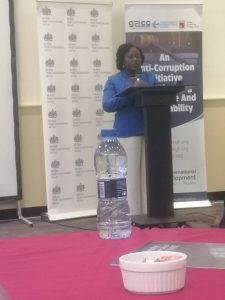 Ms. Osei-Boateng emphasised that audit reports could only achieve their full impact when their findings were effectively communicated and subjected to public discussion.
She therefore urged journalists participating in the training to study the NPA audit report thoroughly, understand its technical content and use the evidence contained in it to ask informed questions and hold institutions accountable.
“The media contributes to the core of public dialogue, strengthens transparency and encourages institutions to respond constructively to audits and other issues,” she said.
She described the petroleum sector as particularly important to Ghana’s development, noting that petroleum products were essential to transportation, power generation, domestic activities, industry and fishing.
She said the importance of the sector made effective and transparent regulation critical to economic development and public confidence.
Ms. Osei-Boateng said the NPA’s responsibility to regulate the downstream petroleum sector meant that citizens had legitimate expectations that the Authority would operate transparently, efficiently and in the public interest.
She said the training would equip journalists with the knowledge and skills required to interpret the findings of the NPA performance audit and report on them responsibly.
“Training such as this equips journalists with the skills to interpret public evidence, ask informed questions and report responsibly on government issues,” she said.
She further stressed that the fight against corruption could not be led by one institution alone, but required collaboration among oversight bodies, government institutions, civil society organisations, the private sector, the media and other stakeholders.
The Executive Director of the Ghana Anti-Corruption Coalition, Mrs. Beauty Emefa Narteh, also urged journalists to move beyond merely reporting statements and instead interrogate audit findings and highlight issues of public interest.
She said the training was intended to strengthen journalists’ ability to understand audit data and produce accurate and meaningful reports on corruption, transparency and accountability.
Mrs. Narteh encouraged participants to make practical use of the knowledge acquired, stressing that the resources committed by development partners and the Ghana Audit Service to the training should translate into quality journalism and greater public understanding of accountability issues.
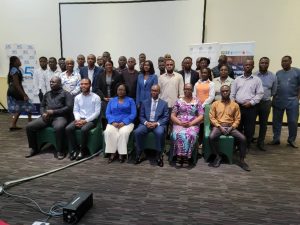
Mr. Samuel Frimpong-Manso,
Deputy Director General in charge of
Performance and Special Audit
Department, Ghana Audit Service
(GAS), in remarks delivered on behalf of the Ghana Audit Service, said the audit of the NPA was undertaken within the constitutional and legal mandate of the Auditor-General to examine the operations of public institutions.
The organisers expressed the expectation that the training would deepen media understanding of the 2025 NPA Performance Audit Report and contribute to informed public discourse on regulation, efficiency, accountability and value for money in Ghana’s downstream petroleum sector.
