
Breaking stereotypes, promoting inclusion and creating equal opportunities for persons with disabilities in Ghana.
In a world that continues to evolve, with technology, innovation and globalisation transforming societies, one important question remains: Are we doing enough to create a society where everyone, regardless of their physical, sensory, intellectual or other conditions, has an equal opportunity to thrive?
For far too long, persons with disabilities (PWDs) have faced discrimination, exclusion and societal attitudes that undermine their abilities and potential. Although the popular expression, “Disability is not inability,” is frequently used in public conversations, the reality is that many persons with disabilities continue to encounter barriers that prevent them from fully participating in society.
This raises an important question: If disability is truly not inability, why do our systems, institutions and social structures continue to make it difficult for persons with disabilities to realise their full potential?
It is time to move beyond words and translate this popular expression into meaningful action by creating an inclusive society where everyone is valued, respected and given the opportunity to contribute to national development.
Understanding Disability Beyond Physical Limitations
Disability is broadly understood as a condition of the body or mind that may affect an individual’s ability to perform certain activities or participate fully in everyday life.
It encompasses three important dimensions: impairment, activity limitation and participation restriction.
Impairment refers to a loss or difference in body structure or mental function, such as visual impairment, hearing loss or the loss of a limb. Activity limitation occurs when an individual has difficulty in performing certain tasks, while participation restriction refers to challenges that prevent someone from fully engaging in different aspects of life, including education, employment, healthcare and social activities.
Disabilities may be physical, sensory, intellectual, developmental or psychosocial. Some are present from birth, while others may be acquired later in life. While certain disabilities are visible, others are not immediately apparent.
However, one important fact must be recognised, having a disability does not take away a person’s intelligence, creativity, ambitions, talents or desire to contribute meaningfully to society.
The impact of disability also varies from one individual to another. Therefore, society must move away from generalisations and recognise persons with disabilities as individuals with different abilities, needs, aspirations and capabilities.
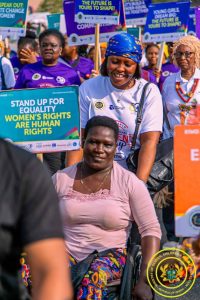
The conversation surrounding disability has gradually shifted from charity and sympathy towards human rights, empowerment, dignity and inclusion. This is a welcome development because, in many instances, the greatest challenges confronting persons with disabilities are not necessarily their conditions but the physical, institutional and attitudinal barriers created by society.
Consider a student who uses a wheelchair but cannot access a classroom because the school has no ramp. Consider a qualified graduate with a visual impairment who is denied employment because an organisation lacks the necessary assistive technology. Or consider a talented entrepreneur with a disability who struggles to access financial support because of discriminatory attitudes.
Are these individuals incapable, or have we created systems that prevent them from succeeding?
Inaccessible public buildings, inadequate transportation facilities, limited educational opportunities, discriminatory recruitment practices and negative societal perceptions continue to restrict the participation of persons with disabilities.
These barriers reinforce the misconception that disability equates to inability.
Yet, across the world, persons with disabilities continue to demonstrate exceptional resilience, creativity, leadership and professional excellence. They are entrepreneurs, teachers, lawyers, journalists, artists, public servants and innovators.
Their achievements remind us that ability is not determined solely by physical or sensory conditions. Rather, it flourishes when individuals are provided with the right opportunities, resources and enabling environments.
Technology has also become an important tool for promoting disability inclusion. Assistive devices, accessible digital platforms, screen-reading software and other technological innovations are helping persons with disabilities to participate more actively in education, employment and public life.
Education and Employment
Education remains one of the most powerful instruments for breaking the cycle of exclusion and empowering persons with disabilities.
An inclusive education system ensures that children with disabilities have access to quality education alongside their peers, with the necessary facilities, teaching resources and support systems to meet their individual needs.
Beyond academic development, inclusive education helps children understand diversity, appreciate differences and develop empathy and respect for others. It also contributes to building a society where discrimination and prejudice are less likely to thrive.
Employment is equally important. Persons with disabilities should not be judged by their physical conditions but by their qualifications, skills, experience and ability to perform assigned responsibilities.
Employers must therefore embrace inclusive recruitment practices, provide reasonable workplace accommodations and create opportunities for career progression.
When persons with disabilities are given equal opportunities to work, they contribute to economic growth, household incomes, innovation and national development.
Institutional Efforts Towards Disability Inclusion in Ghana
In Ghana, promoting the rights, welfare and inclusion of persons with disabilities requires deliberate action, strong institutional commitment and effective implementation of existing policies and legislation.
The Ministry of Gender, Children and Social Protection (MoGCSP), as part of its mandate to promote the welfare and protection of vulnerable groups, continues to play an important role in advancing disability inclusion and social protection.
Through its policy direction and institutional interventions, the Ministry works towards addressing the physical, social and economic barriers that limit the participation of persons with disabilities in national development.
These efforts include promoting the enforcement of disability-related legislation, advocating accessible public infrastructure, encouraging inclusive public services and supporting initiatives that improve the livelihoods and independence of persons with disabilities.
The National Council on Persons with Disability (NCPD), established under the Persons with Disability Act, 2006 (Act 715), is a key institution in this national effort.
The Council plays an important role in promoting and protecting the rights of persons with disabilities, advising government on disability-related policies and supporting the implementation of interventions that advance their inclusion in education, employment, healthcare, governance and other areas of national development.
Through advocacy and public education, the Council also works to address discrimination, challenge negative stereotypes and promote respect, dignity and equal opportunities for persons with disabilities.
Additionally, the Council collaborates with Metropolitan, Municipal and District Assemblies, Non-Governmental Organisations (NGOs), Disabled Persons’ Organisations (DPOs) and development partners to coordinate disability-related programmes and interventions.
One notable intervention is the provision of support through the District Assemblies Common Fund allocation for persons with disabilities. This support, which includes the provision of tools, equipment and other forms of assistance, is intended to promote entrepreneurship, support income-generating activities and improve economic independence.
These interventions demonstrate the importance of institutional collaboration in creating opportunities for persons with disabilities to participate meaningfully in society.
However, beyond the existence of policies and programmes, their effective implementation, monitoring and accountability remain essential to achieving sustainable results.
The Way Forward: From Commitment to Action
Achieving meaningful disability inclusion in Ghana requires more than public declarations and policy commitments. It demands sustained action, collective responsibility and a deliberate effort to remove the barriers that prevent persons with disabilities from reaching their full potential.
Some critical areas requiring attention include:
- StrengtheningInclusive Education: Schools must provide accessible infrastructure, assistive learning materials, trained teachers and appropriate support systems to ensure that children with disabilities receive quality education.
- ExpandingEmployment Opportunities: Both public and private institutions must adopt inclusive recruitment practices, provide reasonable workplace accommodations and create opportunities for persons with disabilities to advance professionally.
- ImprovingAccessibility and Infrastructure: Public buildings, roads, transportation systems, healthcare facilities and other essential services must be designed to accommodate persons with different abilities.
- StrengtheningSocial Protection: Government must continue to improve social protection interventions that support the livelihoods, independence and economic empowerment of persons with disabilities, particularly those facing extreme poverty.
- AddressingStigma and Discrimination: Sustained public education and advocacy are necessary to challenge negative attitudes, eliminate discrimination and promote respect for the dignity and rights of persons with disabilities.
- StrengtheningPolicy Implementation and Accountability: Existing disability laws and policies must be effectively implemented, monitored and enforced to ensure that commitments translate into measurable improvements in the lives of persons with disabilities.
- ExpandingHealthcare and Rehabilitation Services: Accessible, affordable and quality healthcare, rehabilitation and support services must be made available to persons with disabilities across the country.
- PromotingParticipation in Decision-Making: Persons with disabilities must be actively involved in governance, policy formulation, programme implementation and other decisions affecting their welfare. The principle of “Nothing About Us Without Us” must guide every disability inclusion intervention.
- EmbracingTechnology and Innovation: Investment in assistive technology, accessible digital platforms and innovative solutions will help remove barriers and expand opportunities for persons with disabilities.
Conclusion: Beyond Barriers Lies Equal Opportunity
Ultimately, redefining disability requires a collective commitment to changing how society thinks, behaves and responds to the needs and aspirations of persons with disabilities.
It calls for a shift from viewing disability as a limitation to recognising the abilities, contributions and potential of every individual.
Government institutions, civil society organisations, development partners, the private sector, traditional authorities, families and individuals all have a responsibility to promote a society where no one is left behind because of a disability.
The real measure of an inclusive society is not how much sympathy it extends to persons with disabilities, but how effectively it removes the barriers that prevent them from enjoying their rights, pursuing their ambitions and contributing to national development.
It is therefore not enough to say that disability is not inability. We must demonstrate it through accessible infrastructure, inclusive education, equal employment opportunities, effective policies and respectful societal attitudes.
When barriers are removed and opportunities are expanded, persons with disabilities will not merely survive; they will thrive, lead, innovate and contribute meaningfully to Ghana’s development.
Beyond barriers lies a future where ability is celebrated, diversity is respected and no one is left behind. That is the Ghana we must all work together to build.
By: Beatrice Boakye Boateng
Deputy Public Relations Officer
Ministry of Gender, Children and Social Protection (MoGCSP)
ISD STAFF

