The National Schools Inspectorate Authority (NaSIA) has reaffirmed its commitment to supporting private schools across the country, describing them as a formidable force in Ghana’s education system and an important partner in efforts to expand access to quality education.
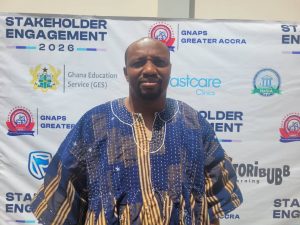
The Executive Director of NaSIA, Prof. Salifu Tahiru, said the Authority was committed to strengthening collaboration with private school operators and other education sector stakeholders to improve standards, accountability and the overall quality of education.
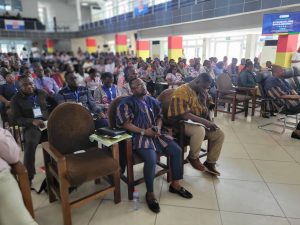
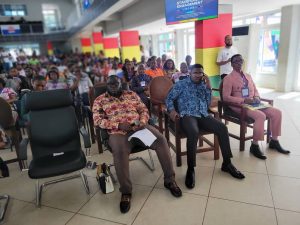
He made the remarks during an interview at the Ghana National Association of Private Schools (GNAPS) Stakeholder Engagement 2026, held under the theme: “Strengthening Quality, Accessibility and Collaboration in Ghana’s Private Education Sector: Building Trust, Improving Standards and Creating a Sustainable Future for Private Schools.”
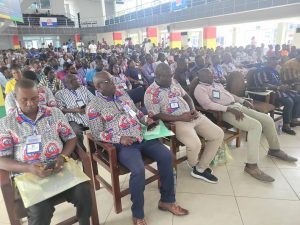
Prof. Tahiru said the engagement provided an important platform for school proprietors and operators to understand the mandate of NaSIA and the reforms being introduced to improve the regulation of schools.
“We are here to support all private schools in the country. We are here to collaborate and see how we can work together as one,” he said.
He noted that since assuming office, the Authority had maintained a positive working relationship with private school associations and other educational institutions, stressing that sustained cooperation was necessary to address challenges confronting the sector.
According to him, private schools have become indispensable to Ghana’s educational development, particularly in communities where public schools are unavailable or inadequate.
He explained that private institutions continue to bridge critical gaps in educational access by providing opportunities for children in underserved communities to receive formal education.
“Private schools have come to stay. They are actually helping the government a lot. I see private schools as a formidable force that the country needs now,” he emphasised.
Prof. Tahiru also disclosed that discussions were ongoing over an initiative expected to benefit private school teachers, although he declined to provide details until the arrangement had been formally concluded and signed.
On concerns about the perceived superior academic performance of some private schools compared with public institutions, the NaSIA boss cautioned against attributing the differences solely to the qualifications of teachers.
He acknowledged that public schools have trained teachers, while some private schools also employ qualified professionals.
However, he suggested that differences in supervision, teacher commitment and contact hours with learners could partly explain variations in academic performance.
He observed that private school proprietors and headteachers often exercise closer supervision over teachers, creating greater accountability and encouraging regular engagement with students.
“In private schools, the attitude of teachers and headmasters is what is helping them to perform far better, not necessarily the quality of teachers in these two different categories of schools,” he explained.
On the regulation of public schools, Prof. Tahiru clarified that NaSIA has the mandate to regulate both public and private institutions, but its current licensing arrangements cover private schools.
He explained that while the Ghana Education Service (GES) manages public schools, NaSIA is responsible for regulating them, just as private school operators manage their institutions under the Authority’s regulatory oversight.
He disclosed that NaSIA was engaging the Ministry of Education, GES and other relevant stakeholders to explore the possibility of extending its licensing regime to public schools.
For now, the Authority intends to publish a list of licensed private schools, as it does not yet have licensing data for public schools.
Prof. Tahiru, however, indicated that the Authority would continue assessing public schools and submit recommendations to the Ministry of Education to facilitate government intervention and support from development partners in addressing identified deficiencies.
He acknowledged concerns about the apparent difference in the regulatory treatment of public and private schools, adding that discussions were ongoing to establish a more comprehensive licensing framework.
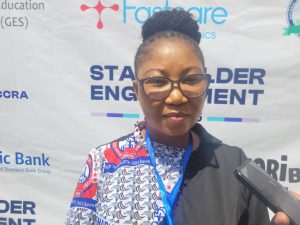
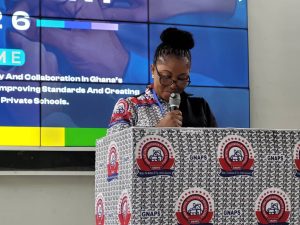
Meanwhile, the Greater Accra Regional Chairperson of GNAPS, Dr. Aisha Asi Akrofi, described the 2026 stakeholder engagement as a significant milestone in the association’s efforts to deepen cooperation between private schools and key education sector institutions.
She said the engagement brought together four major agencies under the Ministry of Education, NaSIA, the National Council for Curriculum and Assessment (NaCCA), the National Council for Tertiary Education (NCTE) and the Ghana Education Service (GES) — to provide a common platform for addressing challenges confronting private schools.
According to her, the rapidly changing educational landscape requires closer collaboration among regulatory and educational institutions to ensure that public and private schools operate within a coordinated framework of standards and expectations.
Dr. Akrofi identified teacher professional development, particularly Continuous Professional Development (CPD), as one of the areas requiring urgent attention.
She noted that teachers in public schools had enjoyed greater access to professional development opportunities, creating a gap that needed to be addressed to ensure that private school teachers were not left behind.
She disclosed that through collaboration with the relevant agencies, private school teachers participated in CPD training on October 30, 2026, with another training session scheduled for November 20, 2026.
She said the initiative was aimed at ensuring that teachers in private institutions also benefited from professional training and capacity-building opportunities to improve teaching and learning outcomes.
Dr. Akrofi explained that unlike previous engagements where individual agencies were invited separately, this year’s programme brought all four institutions together, allowing school proprietors and operators to raise concerns and obtain direct responses from the relevant authorities.
“This is not just a talk show. We want our concerns to be addressed so that together, by the time we come out of this, we have developed practical solutions to our problems with all the stakeholders in the room at the same time,” she stated.
She stressed that the association was determined to move beyond discussions to concrete actions that would address the operational, regulatory and professional challenges facing private schools.
Dr. Akrofi said the engagement marked the beginning of sustained consultations with the relevant agencies, expressing confidence that stronger institutional partnerships would help build trust, improve educational standards and create a more sustainable future for private education in Ghana.
She urged stakeholders to maintain the spirit of cooperation and work collectively towards improving the quality and accessibility of education for every Ghanaian child.