Wassa Professionals Demand 10% Equity in Mining LeasesThe Wassa Professionals Network (WPN) has called on the Government to allocate host communities a 10 per cent equity stake and two per cent of gross mineral sales revenue in mining operations as part of conditions for renewing mining leases in the Wassa enclave.
The group said the proposed arrangement would ensure that communities whose ancestral lands support mining activities receive a direct and sustainable share of the wealth generated from their natural resources.
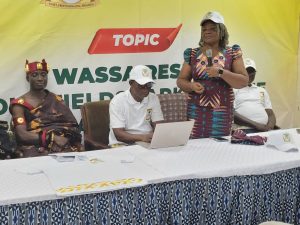
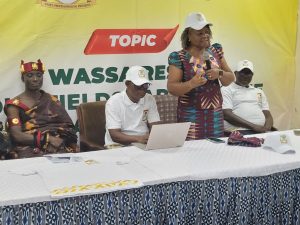
At a press conference in Accra on Tuesday, November 17, 2026, the WPN described the proposal as the “Wassa Reset”, saying the ongoing renewal of the Gold Fields Ghana Limited Tarkwa mining lease presented a historic opportunity to reform mining ownership and benefit-sharing arrangements in the country.
It argued that although mining companies and the Government continued to derive substantial economic benefits from mineral extraction, host communities remained without guaranteed equity participation in the businesses operating on their lands.
The network, which brings together professionals from Amenfi, Fiase and Mpohor, said its proposal was intended to establish a fairer partnership among the State, investors and mining communities.
Under its first proposal, the group wants a 10 per cent free-carried equity interest in mining operations to be held through an accountable Wassa Trust Fund on behalf of host communities.
It further proposed that the equity arrangement should carry voting rights and guarantee community representation on the boards of mining companies.
The second demand is for two per cent of gross mineral sales revenue to be paid directly into the proposed trust fund every quarter, without deductions for operational costs, debts or management fees.
The third proposal seeks formal representation of Wassa communities, including through the WPN, in mining lease transition arrangements, negotiations and governance structures of future mining operations within the area.
The network stressed that the proposed benefits should be additional to statutory royalties, taxes, compensation, environmental restoration obligations and existing community development commitments.
Explaining the rationale behind the demands, the WPN said the Tarkwa Mine remained a high-value strategic asset, with Gold Fields’ November 2025 mineral resources and reserves declaration showing managed mineral reserves increasing from 4.3 million ounces in 2024 to 7.4 million ounces.
It said the reserves indicated an estimated mine life of approximately 17 years, with further potential from additional mineral resources, underground development and exploration.
The group also cited figures attributed to Gold Fields Ghana, indicating that the company retained approximately 74 per cent of Tarkwa’s revenue in Ghana and reported about GH¢5.8 billion in corporate taxes, royalties and dividends to Government in 2025.
It added that local procurement amounted to approximately GH¢8.8 billion, including GH¢6.5 billion attributed to host-community suppliers.
While acknowledging the company’s contribution to the national economy and local development, the WPN maintained that employment, procurement and corporate social responsibility initiatives could not replace direct ownership and participation in the wealth generated from indigenous lands.
The network also highlighted the social and environmental consequences of mining, including the loss of agricultural lands, displacement of communities, environmental degradation and disruption of cultural heritage.
It cited historical research estimating that approximately 4,935 hectares of farmland were lost between 1986 and 2002 within the Tarkwa, Bogoso/Prestea and Damang mining concessions studied.
According to the group, such losses have affected traditional livelihoods and restricted the ability of communities to pursue alternative economic activities.
It further argued that mining-related displacement, pollution and the loss of ancestral sites had imposed long-term costs on residents, including future generations.
On the ownership structure of mining companies, the WPN said Ghana’s existing framework, under which Government holds a 10 per cent free-carried interest, did not provide host communities with an equivalent automatic equity entitlement.
To address what it described as an ownership imbalance, the group proposed a revised mining ownership structure comprising 60 per cent for the mining investor, 10 per cent for Government, 10 per cent for host communities through the Wassa Trust Fund and 20 per cent to be floated on the Ghana Stock Exchange.
It said the proposed arrangement would preserve majority investor ownership while expanding indigenous participation and creating opportunities for Ghanaian investors through the capital market.
The WPN pointed to developments in countries such as Papua New Guinea, South Africa, Botswana, Tanzania and Canada, where different approaches have been adopted to increase local participation and community benefits in mining.
It maintained that Ghana could draw lessons from such arrangements to develop a mining framework that balances investment security with community ownership and sustainable development.
The group called on the Government, Parliament, the Minerals Commission, Gold Fields Ghana Limited, traditional authorities and civil society organisations to engage with its proposals ahead of the expiration of the Tarkwa mining lease in April 2027.
It emphasised that it was not opposed to mining or private-sector investment but wanted an arrangement that guaranteed lasting economic benefits for communities that bear the consequences of mineral extraction.
We are not asking for charity. We are calling for equity, ownership, justice and intergenerational prosperity,” the network declared.
It expressed readiness to engage stakeholders to ensure that the Tarkwa lease renewal became an opportunity to establish a new mining partnership anchored on community ownership, responsible extraction and shared prosperity.