
HomeBusinessFrom Hidden Risk to Shared Responsibility: GEA and ILO Strengthen a Local Frontline Against Child Labour 

From Hidden Risk to Shared Responsibility: GEA and ILO Strengthen a Local Frontline Against Child Labour 

Date:

Related stories

Local Government Minister Commends DRIP Team for Progress at IRECOP Waste Evacuation Site

  The Minister for Local Government, Chieftaincy and Religious Affairs,...

Hon. Mahama Ayariga hands over 20 waste collection tricycles on behalf of the AMA

  The Minister for Local Government, Chieftaincy and Religious Affairs,...

Local Government Ministry directs assemblies to verify billboard permits nationwide

  The Ministry of Local Government, Chieftaincy and Religious Affairs...

Hon. Ayariga hands over Honda motorcycles to boost Aayalolo contra-flow ahead of Christmas

  Efforts to ease rush-hour congestion in Greater Accra have...

BEYOND EARLY DETECTION: WHAT HAPPENS AFTER A BREAST CANCER DIAGNOSIS? 

  Breast cancer awareness must go beyond pink ribbons, screening campaigns and calls for early detection. Ghana must also confront whether its health system is adequately prepared to care for those who receive a diagnosis. Every October, pink ribbons, awareness campaigns and screening activities remind us of the importance of early detection in the fight against breast cancer. Across workplaces, churches, communities and health facilities, women are encouraged to examine their breasts, attend screening programmes and seek medical attention when they notice unusual changes. These messages are important. Early detection can improve treatment outcomes and save lives. But after losing someone I cared deeply about to breast cancer, I have found myself reflecting on a question that deserves equal attention: What happens after early detection? Let me call her Abena. Abena was a woman in her late thirties, a working professional who had spent more than a decade advocating for breast cancer awareness. She organised screening activities within her church and workplace and encouraged other women to take their breast health seriously. She understood the importance of early detection and actively promoted it. In August 2023, she discovered a lump in her armpit. An initial ultrasound examination reportedly indicated that the finding was benign. However, the swelling persisted, and a month later she noticed changes in her left breast. Further investigations, including biopsy, eventually confirmed breast cancer in November 2023. What followed was a difficult journey through the healthcare system. The physician who requested the investigations had travelled outside the country by the time the results became available. Abena was asked to wait until the physician returned before a referral could be made to the next level of care. Eventually, a colleague facilitated the referral. At the oncology unit, she was informed that the workload was high and that an arrangement described to her as "intramural" payment could secure an earlier appointment. Without this payment, her first appointment would have been in February 2024. She paid and was seen that same day. Subsequent review visits also involved additional payments.   The financial demands did not end with securing appointments. Each chemotherapy session cost approximately GH¢2,000, while a supportive injection administered after each session cost about GH¢900 at the time. The medication was provided for administration by health workers at a nearby facility. Abena completed eight cycles of chemotherapy and was preparing for a total mastectomy. Throughout this period, her health deteriorated. She experienced significant complications, including loss of sight and speech, and eventually died in June 2024. Yet, even while battling the illness, she managed to complete her Master of Laws programme. Her determination to keep going remains one of the things I remember most about her. I share Abena's story not to suggest that every aspect of her care was inappropriate or that one experience represents the entire health system. Neither can I establish that the challenges she encountered alone determined the outcome of her illness. However, her experience raises difficult questions about access, affordability, referral coordination and the support available to patients navigating serious illnesses in Ghana. A diagnosis should mark the beginning of a coordinated response, not the beginning of another struggle to find care. BEYOND AWARENESS: EXAMINING THE HEALTH SYSTEM  Early detection is only one part of the cancer care pathway. Following a suspicious finding, patients need timely diagnostic investigations, clear communication of results, appropriate referral, specialist consultation, treatment and continuous follow-up. These services must work together. Delays at any point can create additional anxiety, financial pressure and uncertainty for patients. This is particularly important when viewed against Ghana's commitment to achieving Universal Health Coverage (UHC) by 2030. The Sustainable Development Goals, especially SDG 3, call on countries to ensure healthy lives and promote well-being for all ages. Target 3.8 specifically commits countries to universal health coverage, including access to quality essential healthcare services, affordable medicines and financial risk protection. These commitments must translate into meaningful experiences for people who seek care. Universal health coverage cannot be measured simply by the number of people who enter a health facility or the availability of screening services. It must also be reflected in whether patients receive the right diagnosis at the right time, whether referrals lead to actual access to care, whether treatment is affordable and whether continuity of care is assured. The question is not only whether we can detect diseases early, but whether our health system is prepared to respond effectively when we do. Patient navigation is one area that deserves greater attention in strengthening cancer care. Nurse navigators play an important role in helping patients move through what can be a complex and overwhelming healthcare pathway. They support coordination of appointments and referrals, facilitate communication between patients and healthcare providers, help identify financial and psychosocial barriers and promote continuity throughout treatment. Ghana has made efforts to introduce and strengthen patient navigation services. However, we must look beyond the existence of individual initiatives and ask questions about their reach and sustainability. How many breast cancer nurse navigators are available across the country? How many have undergone structured, competency-based training in patient navigation? Are these services accessible to patients outside the major tertiary hospitals? Do we have adequate systems for their deployment, supervision and continued professional development? A patient navigator should not merely direct a patient from one department to another. The role requires the knowledge and skills to coordinate care, anticipate barriers and help ensure that patients are not lost along the treatment pathway. Strengthening this service should therefore form part of our broader investment in cancer care. The challenges highlighted by Abena's experience are also not exclusive to cancer. Patients living with hypertension, diabetes, stroke, kidney disease and other chronic conditions face similar needs for timely diagnosis, appropriate referral, affordable medicines, regular monitoring and continuity of care. As the burden of non-communicable diseases continues to increase, the demands on our health system will become even greater. This is therefore a broader health-system concern. We need to examine how effectively our services are organised to support patients from the point of first contact through diagnosis, treatment, rehabilitation and follow-up. The ability to provide continuous, coordinated and person-centered care must become a central measure of the quality of our healthcare delivery. TURNING POLICY COMMITMENTS INTO PATIENT EXPERIENCES  Ghana's Free Primary Healthcare initiative presents an opportunity to strengthen access to essential services, improve early identification of health conditions and reduce barriers at the primary healthcare level. Similarly, the Ghana Medical Trust Fund offers an opportunity to address some of the financial challenges associated with serious and chronic illnesses. These are important interventions, but their impact will depend on how effectively they connect with the wider health system. Expanding access to primary healthcare must be accompanied by adequate diagnostic capacity, functional referral systems, specialist services, essential medicines and a health workforce equipped to provide quality care. Financial support must also translate into access to the actual services patients need and when they need them. We must be careful not to create a situation where patients are encouraged to seek early care but encounter delays, prohibitive costs or limited treatment options once a serious diagnosis is confirmed. Access to healthcare should not end at the point of screening or diagnosis. It must extend throughout the patient's journey. This also calls for deliberate investment in the health workforce. Nurses and midwives are central to patient education, early identification, care coordination, treatment support and follow-up. Their capacity must be strengthened through appropriate training, adequate staffing, supportive working environments and the resources required to deliver quality care. Patient navigation, for instance, should not depend solely on isolated projects or the commitment of a few individuals. It should be deliberately integrated into the organisation of cancer services. BEYOND OCTOBER: A CALL FOR NATIONAL REFLECTION  Breast cancer awareness should not end when October ends. Screening campaigns and public education remain essential, but they must be matched by a health system that can respond to the needs of those who receive a diagnosis. Abena's story is a reminder that behind every diagnosis is a mother, a family and a future that may depend on how effectively the health system responds. It is also a reminder that the success of our health policies should ultimately be judged by the experiences and outcomes of the people they are intended to serve. As a country working towards UHC by 2030, we must move beyond counting the number of people screened, educated or reached through awareness campaigns. We must also ask whether those who need further investigations can access them promptly, whether referrals are completed, whether treatment is affordable and whether patients receive the support required to complete their care. This reflection is in honour of Abena and the souls our health system might have failed. Their stories should challenge us to look beyond awareness and confront the gaps that patients encounter when they need care the most. Early detection is important. But what happens afterwards is equally important. And so, beyond the pink ribbons, the screening campaigns and the annual calls for early detection, I leave us with one question: WHAT'S NEXT AFTER EARLY DETECTION?  I hope this question will spark a much-needed national conversation among policymakers, healthcare professionals, health institutions, civil society, communities and every Ghanaian who depends on the health system. We must collectively examine whether our healthcare delivery system is adequately prepared not only to detect illnesses, but also to provide timely, affordable, quality and continuous care to those who need it. Maame Akosua Serwaa Gyening Email: masagg30@gmail.com  


Child labour risks are not always immediately visible. They may exist within households, farms, mining communities and the lower tiers of supply chains, beyond the direct view of regulators and established businesses. Even when a concern is identified, protecting the child depends on whether the information reaches the right institution, receives an appropriate response and is followed through to a satisfactory conclusion.


As part of efforts in closing this gap between identification and action, the Ghana Employers’ Association (GEA), in collaboration with the International Labour Organization (ILO) under the ACCEL Africa Project, organized a two-day workshop among key government, community- and district-level child-protection institutions from 26 – 27 August 2026 in Bibiani.

The workshop brought together 45 stakeholders from Bia East, Juaboso, Wassa Amenfi East and Bibiani Anhwiaso Bekwai to develop a Bipartite Community Coordination (BCC) Framework. The framework is a new mechanism intended to strengthen how child-labour concerns are identified, documented, referred and followed up across cocoa and artisanal and small-scale gold-mining communities.

Participants included representatives of Community Child Protection Committees (CCPCs), relevant district institutions, employers and workers. Their discussions were guided by a practical but important question: when a child-labour concern is identified within a community, does everyone involved know who should act next? 

Ghana already has extensive policies and institutional arrangements for preventing and responding to child labour. CCPCs, District Child Protection Committees (DCPCs) and Metropolitan, Municipal and District Assemblies provide an established foundation for community protection and institutional response. The effectiveness of these structures, however, depends on how well they communicate and coordinate in practice.


Consultations previously conducted by GEA with CCPCs in the four districts found that community committees were making important contributions but could achieve more through stronger connections with one another and with district institutions. Committees in neighbouring communities did not always have reliable channels for sharing information. Referral pathways were not consistently followed, while documentation, feedback and follow-up were sometimes affected by limited literacy and logistical support.

The workshop therefore focused on strengthening the connections among existing institutions rather than creating a parallel system. It provided stakeholders with an opportunity to examine the entire referral process from the identification of a concern to its documentation, referral, institutional response and eventual follow-up.
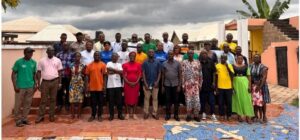
A major outcome of the engagement was the validation of the framework and an accompanying 12-month BCC Coordination Roadmap. The roadmap prioritizes measures that are practical and responsive to conditions within the four districts.


Among the immediate actions is the establishment of a database of CCPCs and their focal persons. This will be supported by a shared contact directory to help communities, businesses and public institutions identify the appropriate person or agency to contact when a concern arises.


A WhatsApp-based coordination platform will also link community and district focal persons across the four districts. The platform will provide a simple and low-cost means of maintaining communication among geographically dispersed communities, sharing relevant updates and drawing attention to referrals requiring institutional action.


The roadmap further commits district actors to monthly focal-person check-ins and quarterly clustered support visits. The check-ins will provide regular opportunities to review emerging concerns and outstanding referrals, while clustered visits will enable district institutions to support several neighbouring communities more efficiently.

Recognizing that documentation must be accessible to the volunteers expected to use it, the framework is supported by simplified tools, including concern notes, referral forms, acknowledgement and feedback slips, follow-up registers and cross-community handover notes. Refresher orientation will also strengthen the practical capacity of CCPC members to identify, document, refer and follow up child-labour concerns.


Progress will be monitored throughout the 12-month implementation period, including through an end-of-year capability scorecard. This will allow the participating districts to assess improvements in coordination, documentation, referral and follow-up, while identifying areas requiring additional support.


The Bibiani workshop represents the latest phase of the GEA – ILO collaboration under the ACCEL Africa Project. Since July 2025, GEA has implemented a combination of research, capacity building, advocacy and social dialogue activities aimed at accelerating the elimination of child labour in the cocoa and artisanal and small-scale gold-mining supply chains of the four districts.


A comprehensive needs assessment involving 159 enterprises identified gaps in institutional capacity, responsible business practices and compliance with child-labour standards. The findings informed the development of a tailored training module, after which approximately 30 trainers from the cocoa, artisanal mining and government sectors were certified to extend awareness creation and capacity building to enterprises, communities and district-level institutions.


GEA also developed an Enterprise Compliance Maturity Model for Responsible Business Conduct, tailored to the cocoa and artisanal mining sectors. The model enables enterprises to assess their existing practices, identify compliance gaps and pursue continuous improvement. A subsequent tripartite dialogue involving government, employers and workers considered practical approaches for implementing the model.


The Enterprise Compliance Maturity Model and the BCC Framework address two interconnected dimensions of child-labour prevention. The maturity model strengthens responsibility within enterprises and supply chains, while the BCC Framework strengthens the network of community and district institutions surrounding children, families and workplaces.


For employers, preventing child labour is not only a social responsibility. It is increasingly linked to responsible sourcing, supply-chain integrity, market access, investor confidence and corporate reputation. Businesses must be able to demonstrate that they possess credible systems for identifying labour risks and responding appropriately when concerns arise.


Through the BCC Framework, hidden risks can be identified earlier, referrals can be handled more consistently and responsibility can be shared more effectively. Although initially designed for four districts, the framework has the potential to generate practical lessons for strengthening community-level child-labour prevention across Ghana, turning shared concern into coordinated action and coordinated action into better protection for every child.


Latest stories